Sagishima / 佐木島¶
A compendium for those who have spent some time here¶
Working draft, 2026. This document sits behind the Welcome. The Welcome was what you read on your first day, when you needed to find your bed and the conch shell. This is what you read later, after some time on the island, when you are ready to learn the layers below the surface you have been walking.
Like the Welcome, this is a working document. Names, numbers, and details will be corrected as we come to know them better. Where a fact here disagrees with the Welcome, the more recent of the two is the one to trust. The footer of each section names the date it was last revised.
1. What this document is for¶
The Foundation operates on Sagishima (佐木島), and yet the island existed for centuries before any of us arrived. To live well here means, eventually, to learn the place in some depth. Not because the depth is required for the work, but because the work itself becomes thin if it floats on the surface of a place we have not bothered to understand.
This compendium is a guide for that second layer of attention. It is the place to come back to when you find yourself asking: who lived in this house before it was empty? when did the orange groves go quiet? why is the gymnasium where it is? what was Kakumeisha before it was Kakumeisha? The Welcome answered the practical questions of arrival. This answers the slower questions of staying.
It is also a working compendium, not a settled record. Some of what is written here was passed down to us by Isso, some by the elders of Sunoue Township, some by the records of Mihara City, some by the Sagishima Data Project's instruments, some by our own observation. As the Foundation lives here longer, the document will deepen. You are encouraged to bring corrections.
2. The shape of the place / 場所のかたち¶
Geography¶
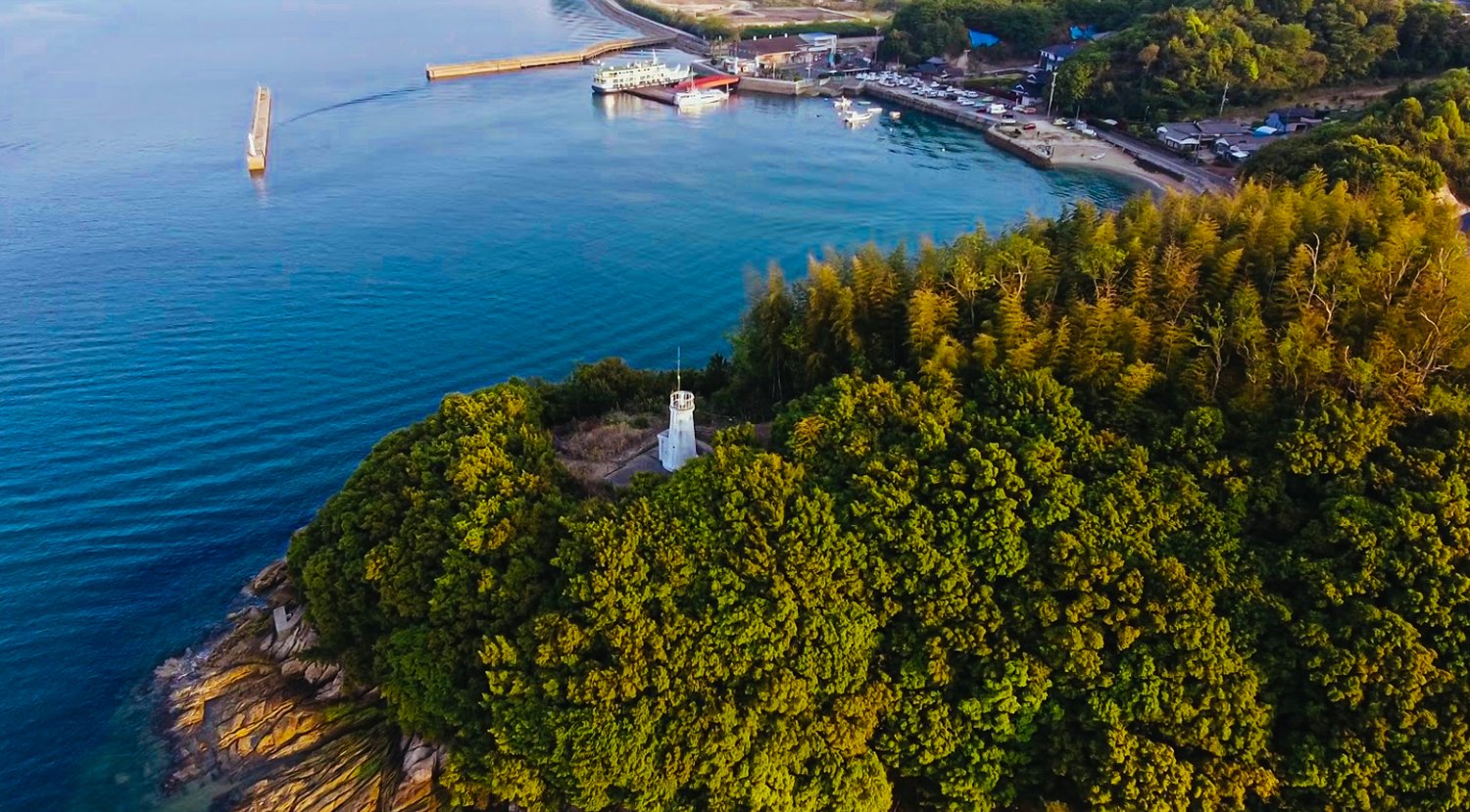
Sagishima is a small island in the Seto Naikai (瀬戸内海, the Seto Inland Sea), the long ribbon of protected water between Honshū and Shikoku. The island sits within the administrative area of Mihara City (三原市) in Hiroshima Prefecture (広島県). It is reached most commonly by ferry from Mihara Port or from Onomichi (尾道), depending on the schedule and the season.
Two different sources, both from RDS, give the island's surface area differently. The 2024 Old Home page (drawn on a planning map) records 8.72 km². The Sagishima Data Project page records 6.3 sq mi (~16.3 km²). The discrepancy is unresolved. The plausible reason is that the two sources are measuring different things: the land area at high tide versus the land area plus shoreline accretions and tidal flats. Until reconciled, treat the smaller number as the conservative land area and the larger as the inclusive boundary.
The island is hilly. The Sagishima Data Project's "Thirsty Island" sub-project notes that formerly farmed terrain has been lightly reforested with poplar and bamboo, and that this matters: bamboo roots are shallow and the slopes are now more vulnerable to landslide than they were when the land was actively cultivated. The hills, in other words, remember what was done to them.
Hydrology¶
Sagishima was hydrologically self-sufficient until a mainland pipeline arrived sometime in the 1950s or 1960s. The shift from local water management to imported water is one of the structural changes that defines the modern island. The Thirsty Island project is working to model how the historical hydrology functioned, and what the implications are now that the population has contracted to a fraction of what those systems were sized for.
How to picture it¶
If you have not yet walked all the way around Sagishima, you should. It is small enough that a day is enough. Walking it changes how you understand the rest of what is in this document.
Sources: Sagishima Data Project page; Old Home page; site observation.
3. The numbers, and what they mean / 数字と、その意味¶
The blog post "佐木島の人口ピラミッド / The demographic pyramid of Sagishima" (Nao Kono, January 2024) records the numbers with a specificity worth preserving.
| Measure | Sagishima (2023) | Japan (2023, comparison) |
|---|---|---|
| Population | 579 | 124 million |
| Aging rate (65+) | 70.6% | 29.1% |
| Average age | ~68 | 48.4 |
For context: the 1955 population of Sagishima was ~3,600. The island has contracted by roughly 84% in seventy years.
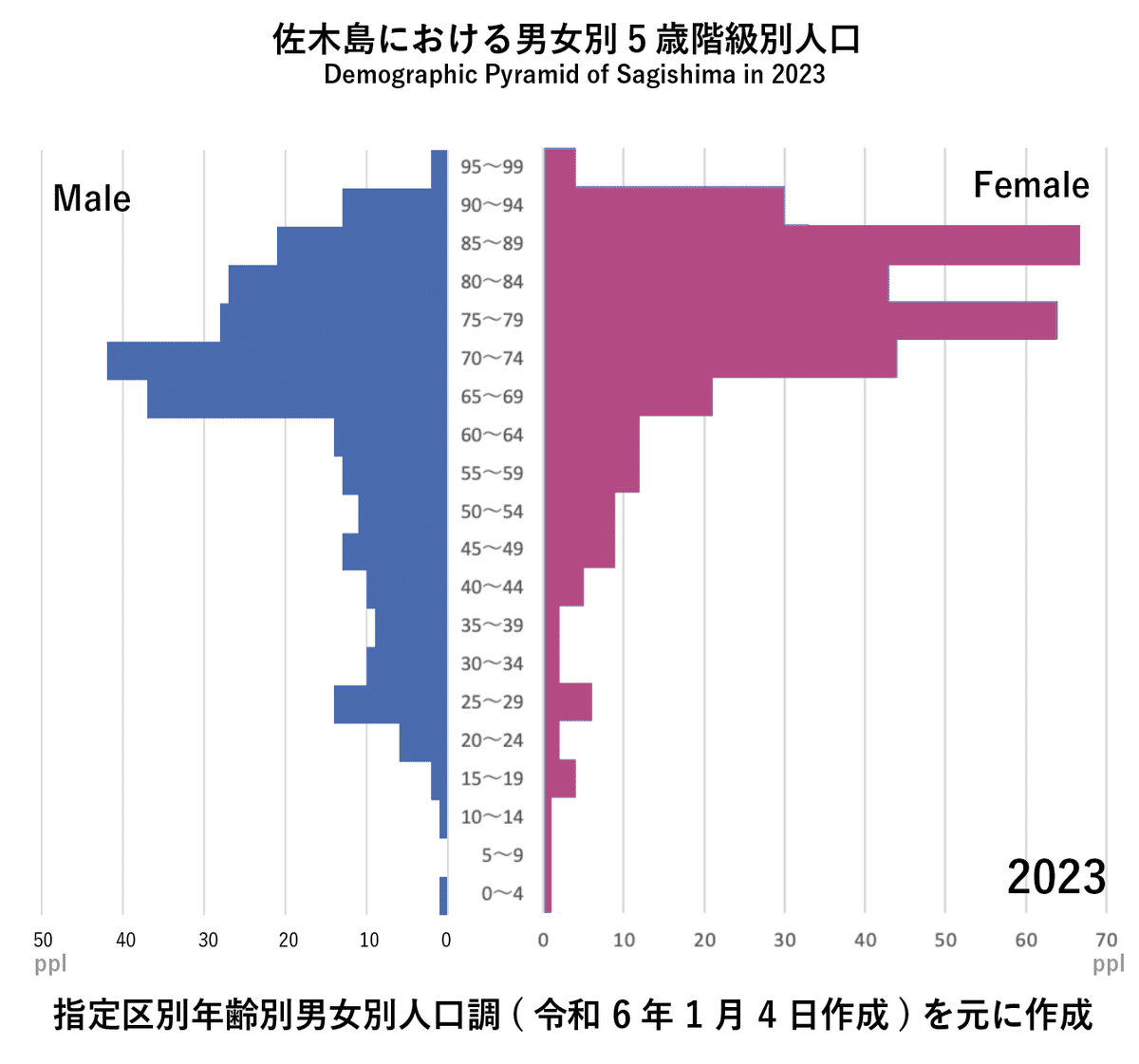
The mass at the top, the absence at the bottom. Read it slowly.
Read those numbers slowly. Seven out of every ten people on Sagishima are over sixty-five. The average islander is sixty-eight years old. Nao's blog post puts the point plainly: "The influx of young people is essential to maintaining the community." This is the framing inside which the Foundation works.
The numbers also tell you something about the felt texture of daily life. Sagishima is quiet because there are not many people. The bus does not run often. The single store is small because the customer base is small. The houses are vacant because the people who lived in them have died or left, and their children, who are themselves often in their sixties, no longer live on the island. To be a young person on Sagishima is unusual; to be a young arrival is unusual to the point that you will be noticed and, before long, recognized.
This is not a tragic situation, but it is a serious one. Treating it as the latter and not the former is one of the small daily disciplines of being here.
Source: blog post n241cbe045f22 (Nao Kono, 2024-01-21).
4. The story of Sagishima in human time / 歴史¶
We do not have a comprehensive history of Sagishima ready to publish. The Isso-San Anthropology initiative (see Studio X Other Thoughts) is the Foundation's commitment to recording one, in collaboration with Isso while he is around to tell it. What follows is the rough shape of what we know now. Each generation of this document will, we hope, deepen it.
Pre-modern: an island that fed itself¶
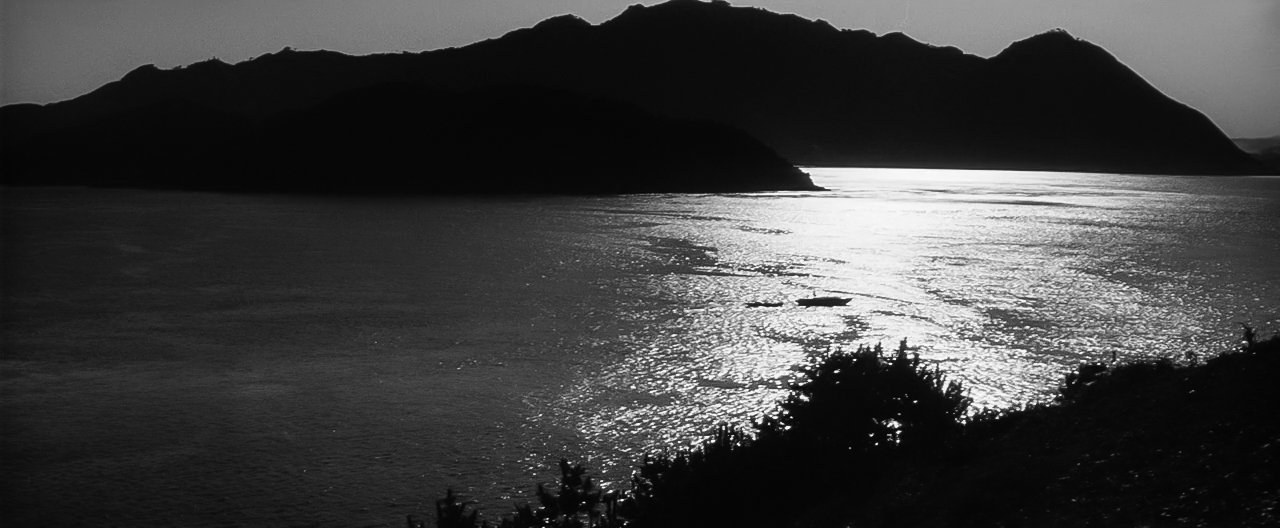
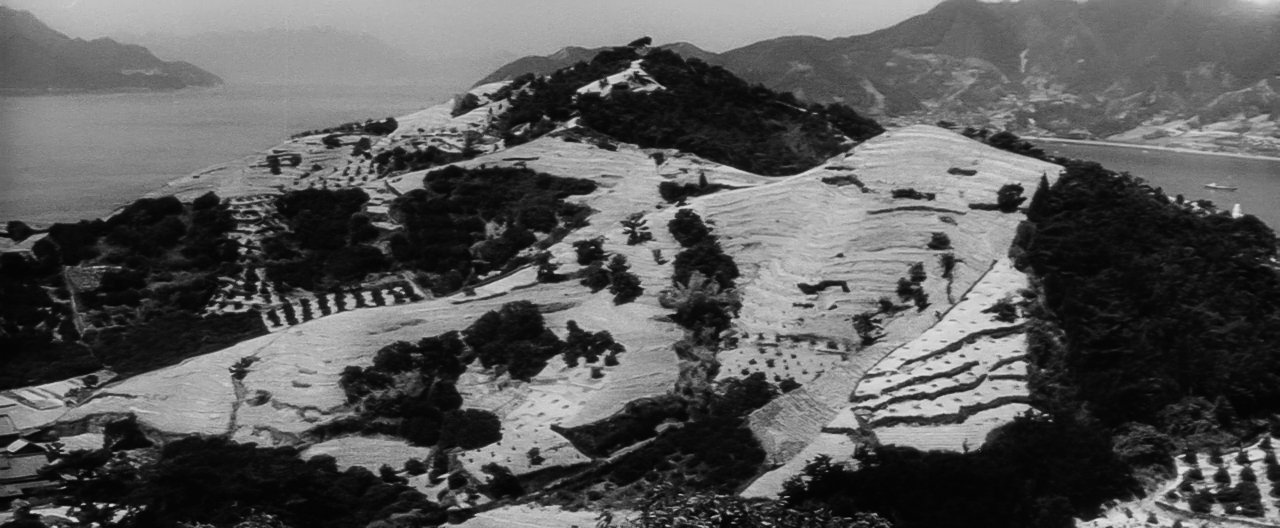
Before the long contraction, Sagishima was a self-sufficient agricultural and maritime community. The 2024 Old Home page summarizes the historical economic activities as wooden boat-building, family farms, and fisheries. The island's hydrology supported intensive cultivation. The aerial footage that opens Kaneto Shindo's 1960 film The Naked Island (裸の島) shows the kind of cultivated landscape this was: terraced, worked, full of small structures and human movement.
The 19th century and the lineage of the school¶
In 1875 a school was founded on Sagishima under the name Kaku-Mei-Sha (格明舎). It operated for 120 years, closing in 1995. The name carries forward into the current Kakumeisha not as the same building, but as the inherited educational lineage of the place. To call the current schoolhouse Kakumeisha is to claim that lineage explicitly. (See section 7 for the full Kakumeisha story.)
The post-war contraction¶
From the 1955 peak of ~3,600 residents, the island has contracted continuously for seventy years. The most immediate visible consequence is the akiya (空き家, vacant houses): roughly a third of Sagishima's housing stock, possibly more by some measures, now stands empty. The Old Home page notes that the contraction has been driven by aging in place plus the migration of children and grandchildren to the cities. The pattern is not unique to Sagishima. It is shared with much of rural Japan.
Recent decades: the conditions for the Foundation¶
By the time the Foundation began work on the island in earnest, Sagishima was already in the demographic shape it is now. The Foundation did not arrive ahead of the contraction; it arrived inside it, and it works inside it. The institutional timeline, gathered from the blog and the City partnership document:
- 2017: the first studios run under the Red Dot School name.
- 2018: earlier collaborations begin (the Sagishima Dining Table workshop is recorded as the start, per the Mihara City partnership document).
- 2020: Sumifuku House becomes vacant.
- 2022: the building that will become Kakumeisha becomes vacant.
- May 2023: the first GAFRAB (Giving A Fish, Releasing A Bird) residential studio. The Red Dot School is formally established. Final-day presentation at the elementary school gymnasium to roughly thirty island residents. Nao records the moment afterward: "The moment I heard the grandmother's words, I finally understood that the vision of 'creating a school' had truly begun in reality." This is the founding moment as the institution itself describes it.
- September 2023: GAFRAB 02.
- January 2024: Melbourne University Master of Architecture students visit (14 participants) for a joint session. The Sagishima Loteria card game is created collaboratively with the Sagiura children, drawing on Bryan's Mexican heritage. (More on this in section 9.)
- February 27, 2024: formal partnership with the City of Mihara is signed.
- 2024 (early): Sumifuku House is donated to the Foundation by Toshimitsu Hamamoto.
- March 2024: the Work / Party event runs in Sunoue; hanami party at Sunoue Beach on March 25.
- May 2024: GAFRAB May 2024 (sixteen students, thirteen international and three Japanese), themes "deconstruction, upcycling, festivals, and circulation." Final presentation at Kakumeisha and Sunoue Beach.
- October 2024: GAFRAB October 2024, second Old Home phase; hikiya hand-relocation of the timber frame.
- 2024 (mid): the schoolhouse is formally named Kakumeisha (it had been called Terakoya in early references).
- 2025 (March): Sagishima Short Stay (SSS!) runs March 27 to 31. Moe Kanazawa (金澤萌), plasterer, joins as instructor for the shikkui workshop.
- 2025 (April): a five-day renovation short program on Sumifuku House (plastering, salvage organization, joist installation). The April 2025 blog post articulates the philosophical frame: "having a distant place is something like a technique for people learning something and living richly."
- 2025 (April–June): the SAGISHIMA Cheers! donation campaign, an Amazon wishlist of physical donations (primarily beverages) for the studio's evening communal meals.
- May–June 2025: Wall Party studio.
- October 2025: Wall Party II.
- 2026: Salvage-as-a-Service program, currently active.
Sources: blog post n94cc32ff41cd; the Old Home page; Mihara City partnership document; Kaneto Shindo The Naked Island (1960).
5. The districts of the island / 島の地域¶
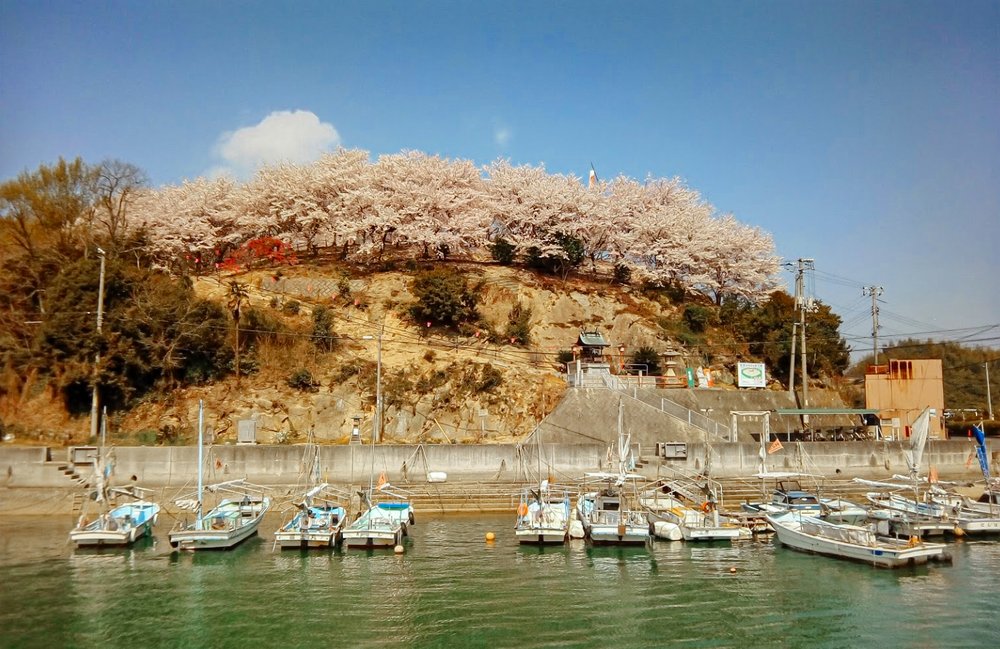
Sagishima is administratively a single area within Mihara City, but locally it is composed of districts (集落, shūraku, hamlet-clusters) that have their own character. The two that the Foundation most directly engages with are:
Sunoue / 須ノ上¶
The northern district of the island. Sunoue is where Kakumeisha stands, where the Sunoue Gymnasium stands, where the 6:30am Radio Taiso is held, and where the Foundation's deepest community relationships have formed. Isso lives in Sunoue. When the Welcome speaks of "Sunoue Township" as the rhythm anchor of the Foundation, this is the place it means.
Sagiura / 鷺浦¶
The district that holds Sagiura Elementary School (鷺浦小学校), the island's sole operating elementary school, with roughly twenty-five children, a principal, and a head teacher. The Foundation collaborates with the school on deconstruction ceremonies, curriculum work, and a recurring set of activities that include sports events, arts and crafts classes, and plastering workshops. The Mihara City partnership document records "interaction with Sagiura Elementary School and the local community" as one of the three formal pillars of the City partnership.
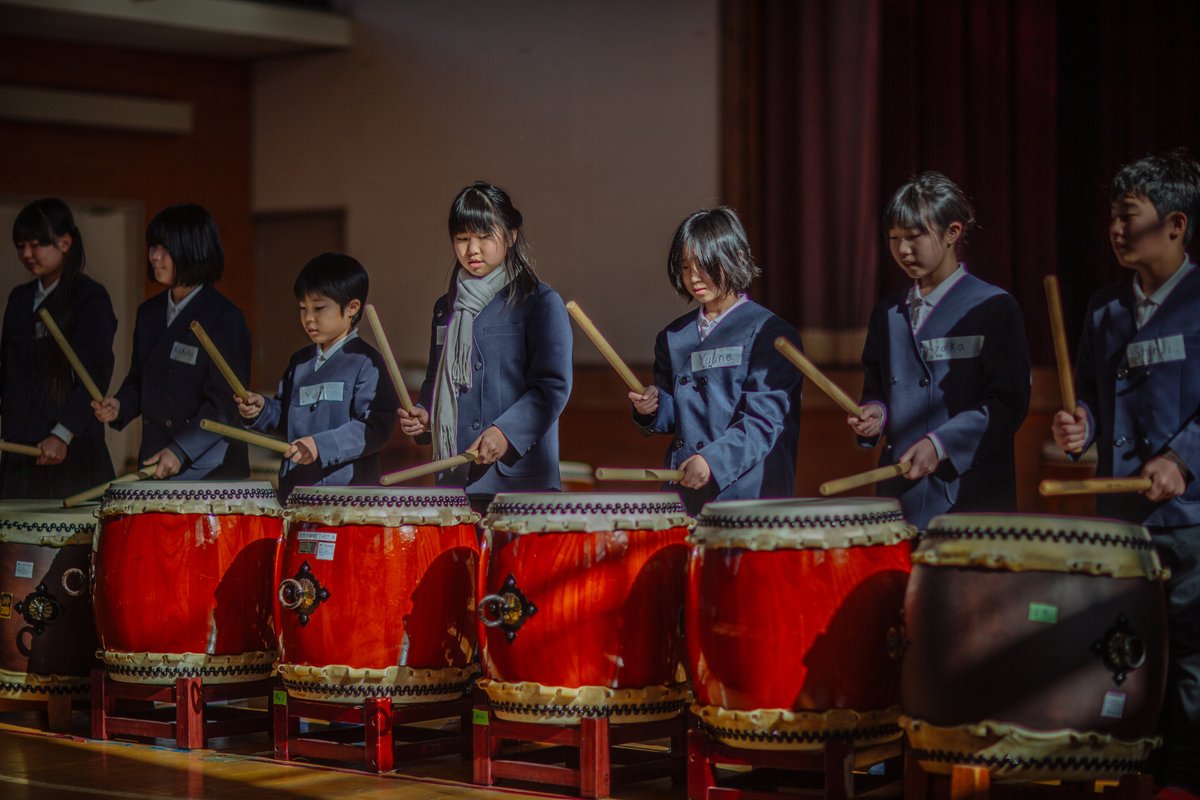
Sagishima Loteria (佐木島ロテリア) is the most visible artifact of the Foundation–school relationship. Loteria is the Mexican card-bingo tradition, and Bryan (whose heritage is Mexican) brought the form. In January 2024 the children and the Foundation co-created a Sagishima version: the cards depict things specifically of the island. When Melbourne University students arrived for fieldwork that same month, the children welcomed them with a taiko drum performance. These exchanges are the substance of the relationship; the formal pillars of the partnership are how it is held in writing.
(A note on transliteration: the City partnership document uses the romaji "Sagiura" once, but the school's standard romanization is "Sagiura." The Foundation uses Sagiura.)
Other parts of the island¶
There are other clusters and households on the island that the Foundation has not yet engaged with at depth. These are part of what the Isso-San Anthropology work, and the Foundation's longer presence here, will eventually open up.
Sources: blog posts; partnership document; Welcome doc.
6. The arrival points, the ports, the beach / 港と上陸地点と浜辺¶
Sagishima has several ports. The Foundation's primary one is Sunoue Port (須ノ上港), in the northern district where Kakumeisha stands. Sagi Port (鷺港) in the south is the historic main port, used by some ferry routes. The Foundation's stationery and customs address is Mukōtanoura (向田野浦): 〒723-0022 広島県三原市鷺浦町向田野浦5008-3.
When studios begin from Onomichi, the standard ferry departs Onomichi Port around midday and arrives Sunoue Port a little over twenty minutes later. From Sunoue Port, Kakumeisha is a few minutes' walk. Sunoue Beach (須ノ上ビーチ) is the sandy stretch in front of the former Sunoue Elementary School building, a two-minute walk from Sunoue Port, and is where the Foundation's larger gatherings happen: hanami in the spring, summer beach meals, the post-studio party held at the end of each major program. (Daily cohort meals, by contrast, happen in the space between Tsumiki House and Itaru House. The beach is for the public-facing events.)
The other approach is from Onomichi more deliberately. The Welcome covers the practical mechanics. What is worth knowing in this slower document is that Onomichi and Sagishima are not merely geographically adjacent. They are kin. The Onomichi Akiya Saisei Project (尾道空き家再生プロジェクト) is one of the few organizations doing closely related work to ours, and the friendship is real. Their Anago No Nedoko (あなごのねどこ) hostel, their renovated houses (Ma, the Gaudi House), and their broader practice of returning vacant Onomichi buildings to use are a parallel to the Workshop's practice. Treat a stay in Onomichi on the way to Sagishima as part of the Foundation's working geography, not as tourism.
Other Sagishima place names worth knowing as you walk: Dosojin Hill (道祖神の丘), named for the dōsojin boundary-deity statues placed along old Japanese paths. The hill has been used as a hanami location and is one of the spots the 88+α route winds through.
7. The buildings that house us, and Kakumeisha in particular / 私たちの建物¶
Kakumeisha (格明舎)¶
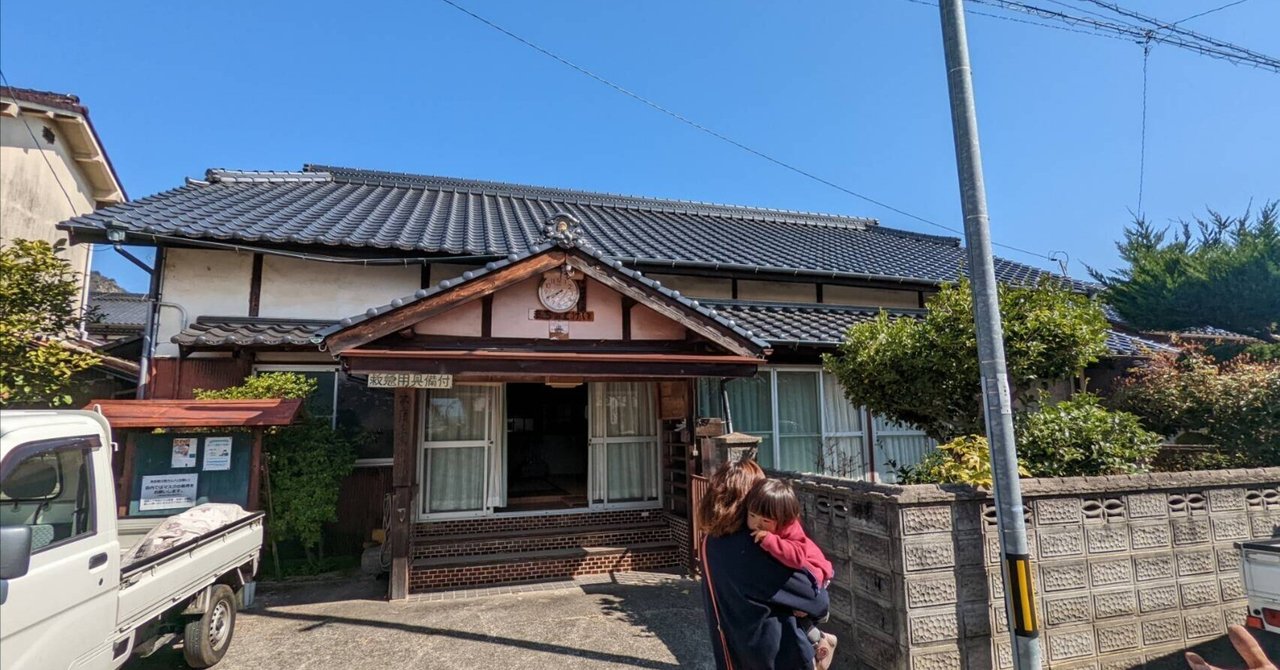
The story of the schoolhouse is recorded in Nao Kono's January 2024 blog post "私たちの校舎「格明舎」/ Our school building Kaku-Mei-Sha." What follows is its summary, kept here because the story will not be on note.com forever and because it belongs in the Foundation's standing record.
- The current building was constructed in 1949 as a public clinic (診療所). It served the island's medical needs for many decades, until medicine moved off-island as the population contracted.
- The building became vacant in 2022.
- Isso (Kawamoto Yoshishige, 河本義成), who lives in Sunoue and is now a Foundation board member, proposed donating the building to the school. The donation is the structural reason the Foundation has a schoolhouse at all.
- The Red Dot School began using the building in May 2023, in time for the first GAFRAB studio.
- In 2024 the building was formally named Kakumeisha (格明舎). For a time before that it had been informally called Terakoya (寺子屋, the Edo-period term for community schoolhouses).
- The name Kakumeisha (格明舎) descends from a different building: the original Kaku-Mei-Sha school, founded on Sagishima in 1875 and closed in 1995 after a 120-year run. The lineage is named, not the building. To name the current schoolhouse Kakumeisha is to claim the Sagishima educational tradition explicitly.
- The name itself, character by character, reads 格 (essence) + 明 (to clarify) + 舎 (a building, a shelter). The Foundation glosses it as "exploring the essence of things."
- Kakumeisha is the oldest standing public structure on Sagishima, in the sense that the building (1949) predates everything else still standing that was built for public use.
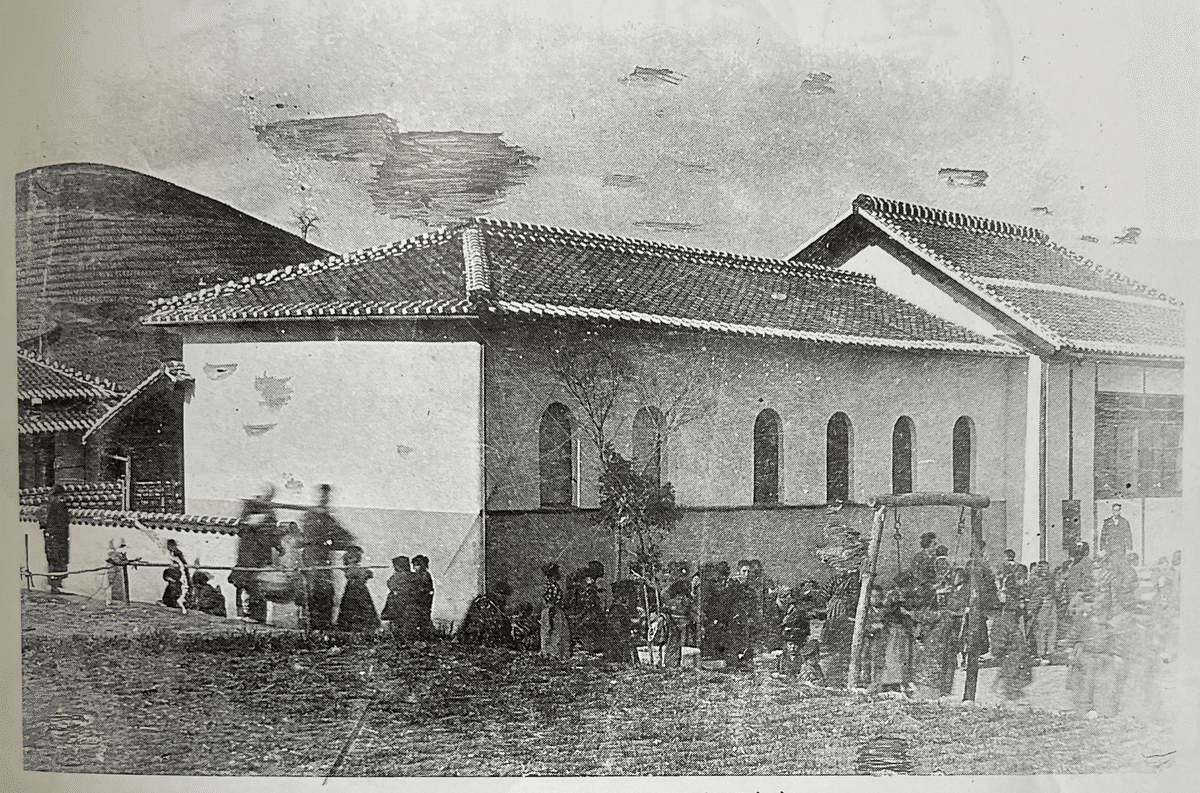
To work in Kakumeisha is, in this sense, to work in a doubly inherited place. The walls were built for one public purpose, the name was carried over from another, and the current use is a third. None of the layers are erased. The Workshop's ethic ("that what previous generations built deserves care") is the same ethic Kakumeisha itself embodies.
Sumifuku House (住福の家)¶
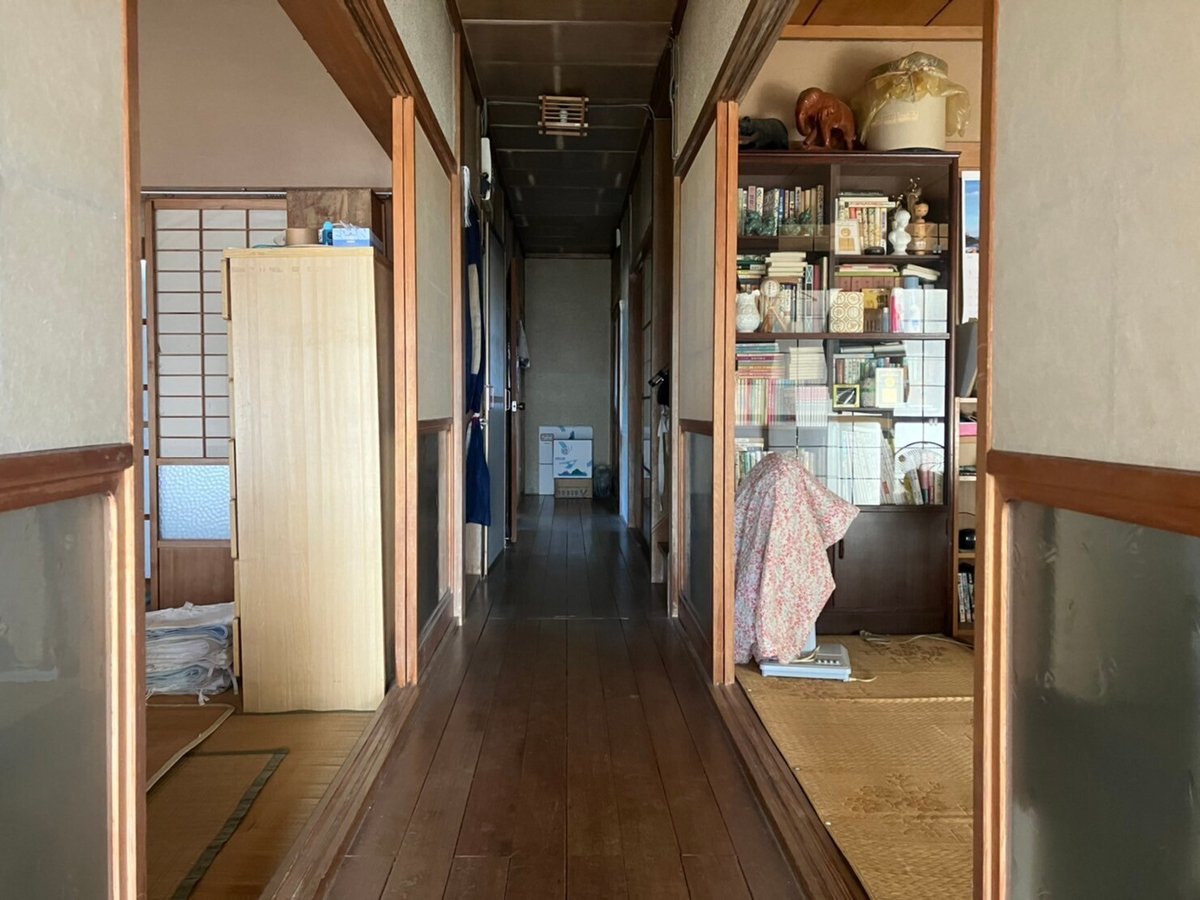
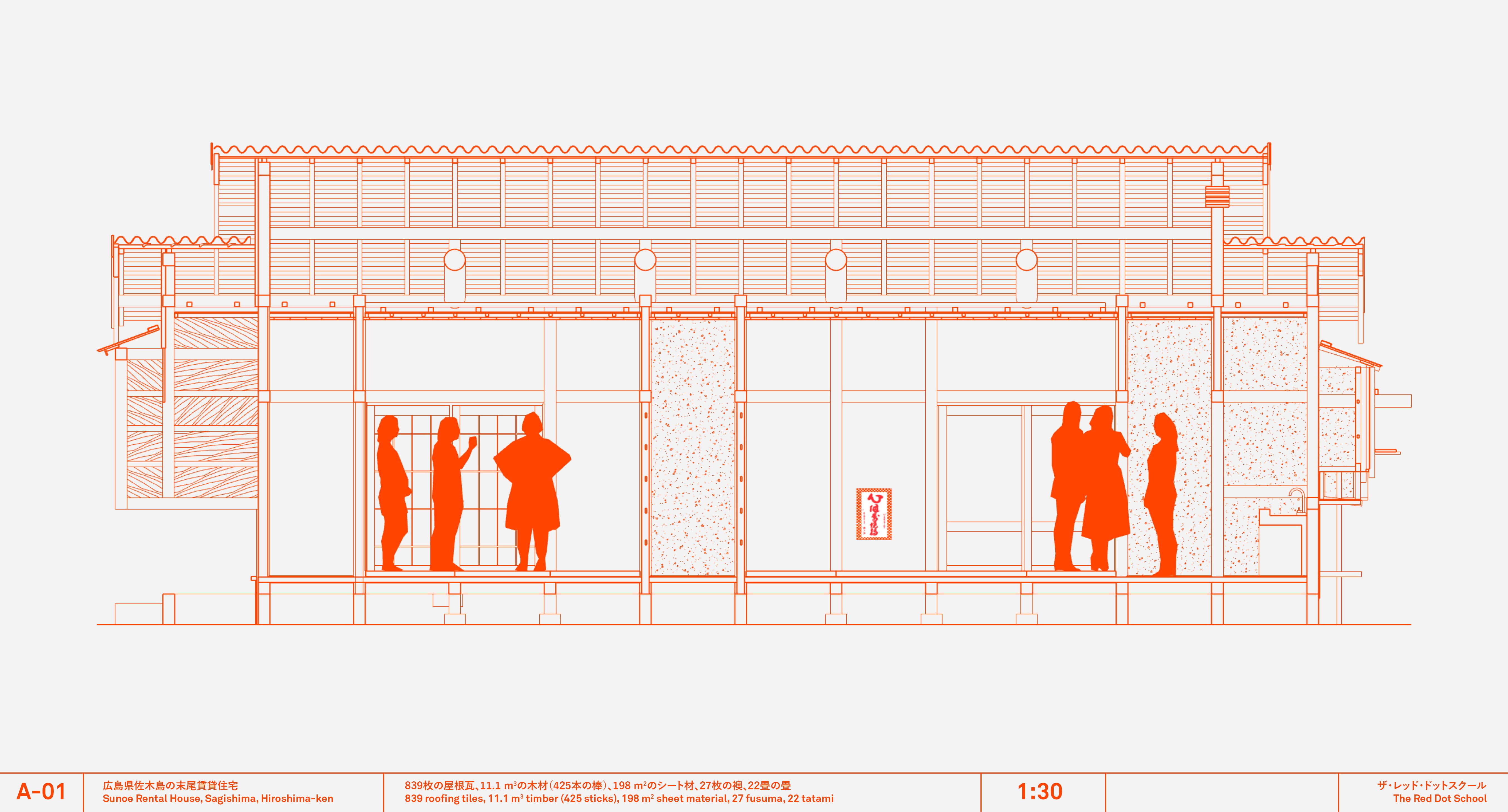
The dormitory was built in 1961 and expanded in 1972. It is a two-storey wooden building with distinctive blue roof tiles, four tatami bedrooms, a kitchen, a dining room, shower, and toilet. The grounds include a garden and storage; the house is three minutes' walk from the ocean.
The house was donated to the Foundation in early 2024 by Toshimitsu Hamamoto (浜本敏光), after standing vacant since approximately 2020. The Hamamoto family's name carries the story of the building. They historically operated a cargo vessel named Sumifuku-maru (住福丸), which carried Chikuho coal from Wakamatsu Port to the Kansai region. The house took its name from the boat, and the boat from the wish embedded in the characters: 住 (to live) + 福 (good fortune) + の家 (the house of), "the house of the good fortune of living." The Sumifuku-maru carried coal up the inland sea; Sumifuku House carries students now.
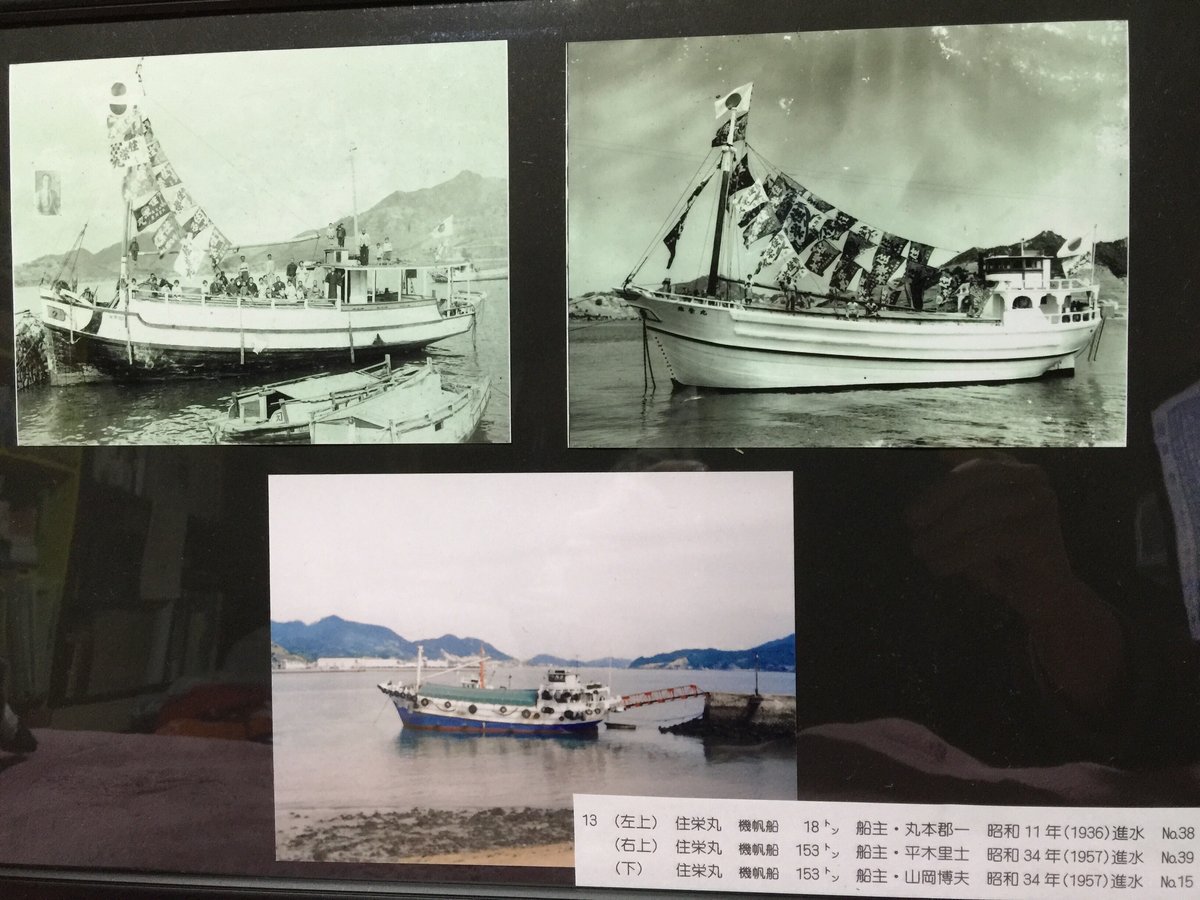
Sumifuku is the more frequently used of the two student houses. The studio's working capacity references a cohort of around 14.
Asahi House (旭の家)¶
Student housing. Same general type and arrangement as Sumifuku. Used in larger cohorts.
Tsumiki House (積木の家)¶
Teacher housing. The space between Tsumiki and Itaru is where the cohort eats together.
Itaru House (伊太留の家)¶
Teacher housing. The space between Itaru and Tsumiki is the daily gathering point of the studio.
The Sunoue Gymnasium (須ノ上体育館)¶
The Foundation's salvage warehouse and workshop. Formerly the gymnasium of the Sunoue elementary school that closed when the population could no longer support it. The building is large, structurally sound, and is currently the storage and processing space for everything the Workshop has recovered from disassembled island houses. The chart annotations note that the adjacent elementary school and gymnasium are for sale from the City of Mihara, cheap, and that a tech company nearly acquired the property to convert it to a remote-work farm before the Foundation noticed. This is a live property question. See Audit_RDS/04_Resources_Real_Estate_Assets/README.md for status.
Akiya more broadly¶
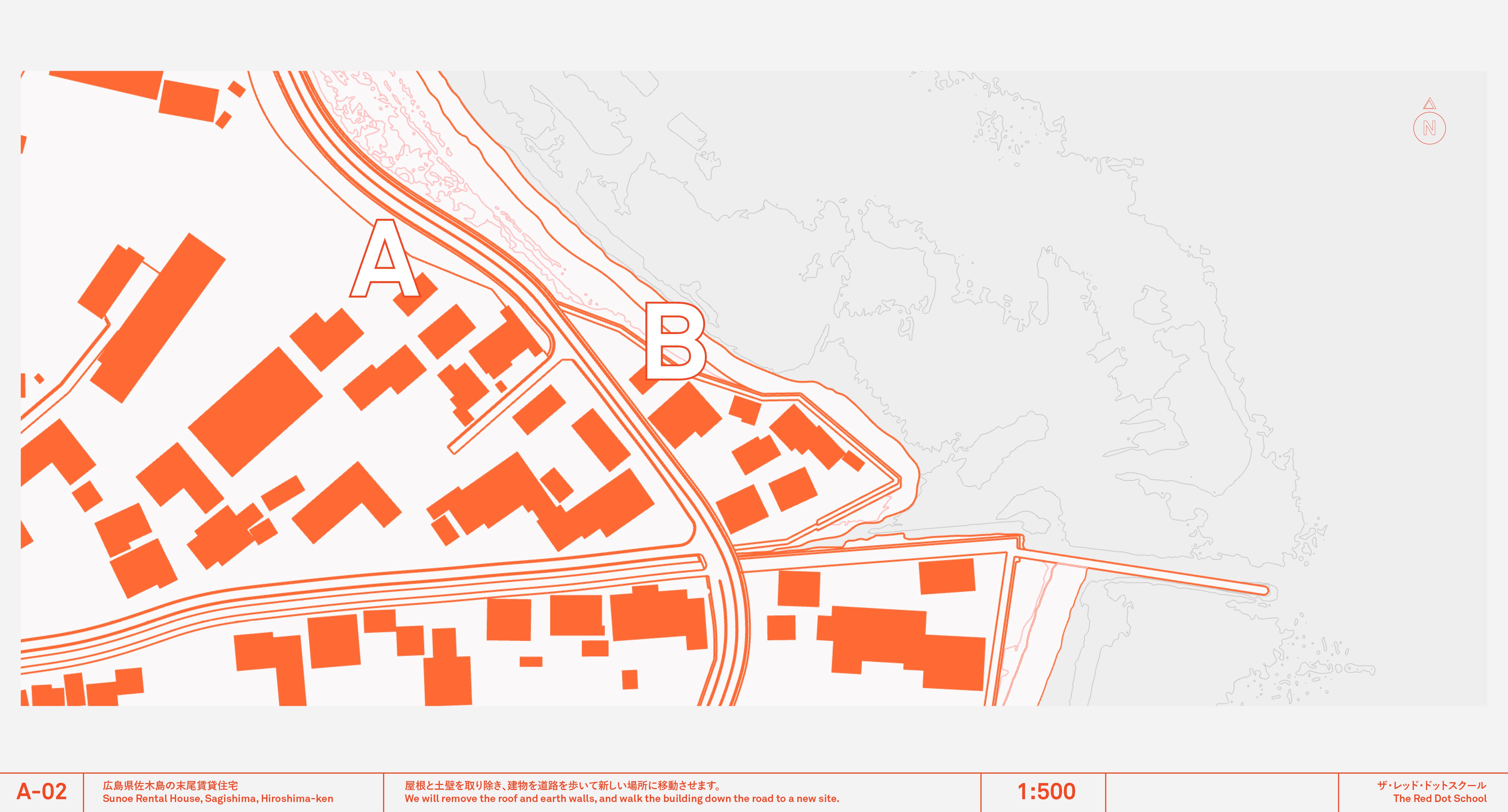
Roughly a third or more of Sagishima's houses stand vacant. Each of them is a specific building with a specific story. The Workshop's work, conceived at full scale, is the patient one-by-one engagement with these houses: documenting them, where appropriate disassembling them, salvaging their materials, and (in some cases) restoring them for new use. This is not abstract. It is one house at a time, named, with the family's permission, in dialogue with the City of Mihara and the islanders.
Sources: blog post n94cc32ff41cd; Theory of Change 251227.6.A; chart 260514.4.A annotations; Workshop notes.
8. The 88+α Ohenro / 88+α 御遍路¶
Sagishima holds its own miniature version of the Shikoku Ohenro (四国遍路), the famous Buddhist pilgrimage of 88 sacred sites. The Sagishima version consists of 88 small stone alcoves (jihi, hokora) scattered across the island, each housing a small object of devotion. There are some extras beyond the 88 (the "+α"), which the Foundation's documentation has begun to catalogue.
Two facts about the alcoves on the ground today, per Bryan Ortega-Welch's tour notes from 2026-05-29. First, the mini Ohenro was the work of a single wealthy patron in the past, who decided to create the route and place the hokora across the island. The Sagishima Ohenro is therefore a founded artifact, not a slowly accreted folk tradition: one person willed it into being. Second, although each hokora carries a number and a name, the order on the ground is no longer legible. The alcoves were moved repeatedly over the years, often as a joke. When someone on the island got married, neighbors thought it was funny to relocate a hokora to stand in front of the newlyweds' house. The sequence has drifted from the geography, so walking the route in number order is no longer the same as walking the route in space.
The alcoves are not in any one place. They are along paths, at corners, beside fields, in the woods. Walking the full route is the way to encounter them; the route itself is the heart of the practice. The Sagishima Data Project's 88 Plus Alpha sub-project is documenting each alcove with its history, current location, and condition, which now also means documenting where each hokora has moved from and to.
The Foundation has imagined an experiential layer over the Ohenro: a stamp-rally rubbing book, where the visitor takes a paper rubbing of each alcove sign across the island, and the completed book is brought to a shrine where (in the imagined version) a camera-and-light system acknowledges each rubbing as it is placed at the altar, building toward a quiet ceremony of completion. The reward for completing all 88+α: a small gilded artichoke charm (see section 11 on agriculture for the artichoke context).
You should walk at least some part of the Ohenro while you are here. It is the slowest available reading of the island.
Sources: 88 Plus Alpha rally doc; Sagishima Data Project page; Bryan Ortega-Welch tour notes (2026-05-29, communicated 2026-05-30).
9. The festival year, and the daily rhythm / 祭りの年と、日常¶
Ke (日常) and Hare (非日常)¶
Japanese cosmology distinguishes between Ke (日常, the ordinary), the texture of daily life, and Hare (非日常, the extraordinary), the modes of festival, ceremony, and ritual. The Sagishima Data Project's Infinite Matsuri sub-project is an attempt to represent the island as it appears in its Hare register: the festival modes, the ceremonies, the imaginary city the island becomes during matsuri. The visual references the project draws on are C.J. Lim's Dream Isle, Ettore Sottsass's Festival Planet, and Archigram's Instant City.
The point of the Ke/Hare frame is not to elevate Hare over Ke. It is the opposite. The Hare modes exist because daily life needs them as a counterweight, and the daily life is what they return to.
Radio Taiso, 6:30am, in Sunoue¶
The single most important daily ritual the Foundation has chosen to attach itself to is the 6:30am Radio Taiso (ラジオ体操) in Sunoue Township. Radio Taiso is a national practice, broadcast on NHK Radio 1 every morning, and individual neighborhoods across Japan have organized their own gathering rituals around it for generations. Sunoue's gathering has continued for as long as anyone here remembers.
The Foundation has elevated attendance at Radio Taiso to the canonical indicator of integration with the island. The Theory of Change names it as the single chosen external goal C: "increase in attendance at the Sunoue Township's morning calisthenics exercises."
If you find yourself disliking Radio Taiso, or skipping it, you are not in trouble. But examine why. The gathering is the place where the Foundation is most visibly part of, or visibly not part of, the community. Most other Foundation activities happen inside Foundation walls. Radio Taiso happens in the open.
Obon (お盆) and other annual ceremonies¶
The summer festival of Obon, when the spirits of ancestors are believed to return to the household, is observed on Sagishima as it is throughout Japan. Sunoue has its own Obon dance music and choreography (盆踊り), which the Theory of Change describes as part of the Foundation's Archive: the music, the steps, and the local variations have been recorded so that they are not lost as the people who hold them in living memory pass on. The Sagishima Data Project considers the Obon dance an Infinite Matsuri exemplar.
The deconstruction ceremony¶
The Foundation has developed, in collaboration with Sagiura Elementary School, a ceremony for the disassembly of an akiya. This is the ritual inversion of jichinsai (地鎮祭, the Shinto ground-breaking ceremony), described elsewhere in the Foundation's documents. The ceremony is one of the Foundation's own ritual contributions to the island's calendar. It is also the most concrete expression of the Workshop's ethic.
Sources: Theory of Change 251227.3.A; Sagishima Data Project page; Welcome doc; Old Home page.
10. The 88 + α as a structural metaphor / 88 + α¶
The number 88, in the Ohenro tradition, is bounded but indefinite: bounded in that it is decided and fixed in the religious tradition; indefinite in that the +α admits new locations as they are needed. The Sagishima Foundation operates on a similar structure. There are five organs and four shapes; they are bounded. There are also new initiatives, new fellows, new ideas (the +α); these are admitted as needed. To work here for any length of time is to live within the tension between the 88 of the institutional structure and the +α of what is added because the place requires it. The Ohenro is one model for that tension that the island itself already provides.
11. What grows and what we eat / 食べもの¶
Existing agriculture¶
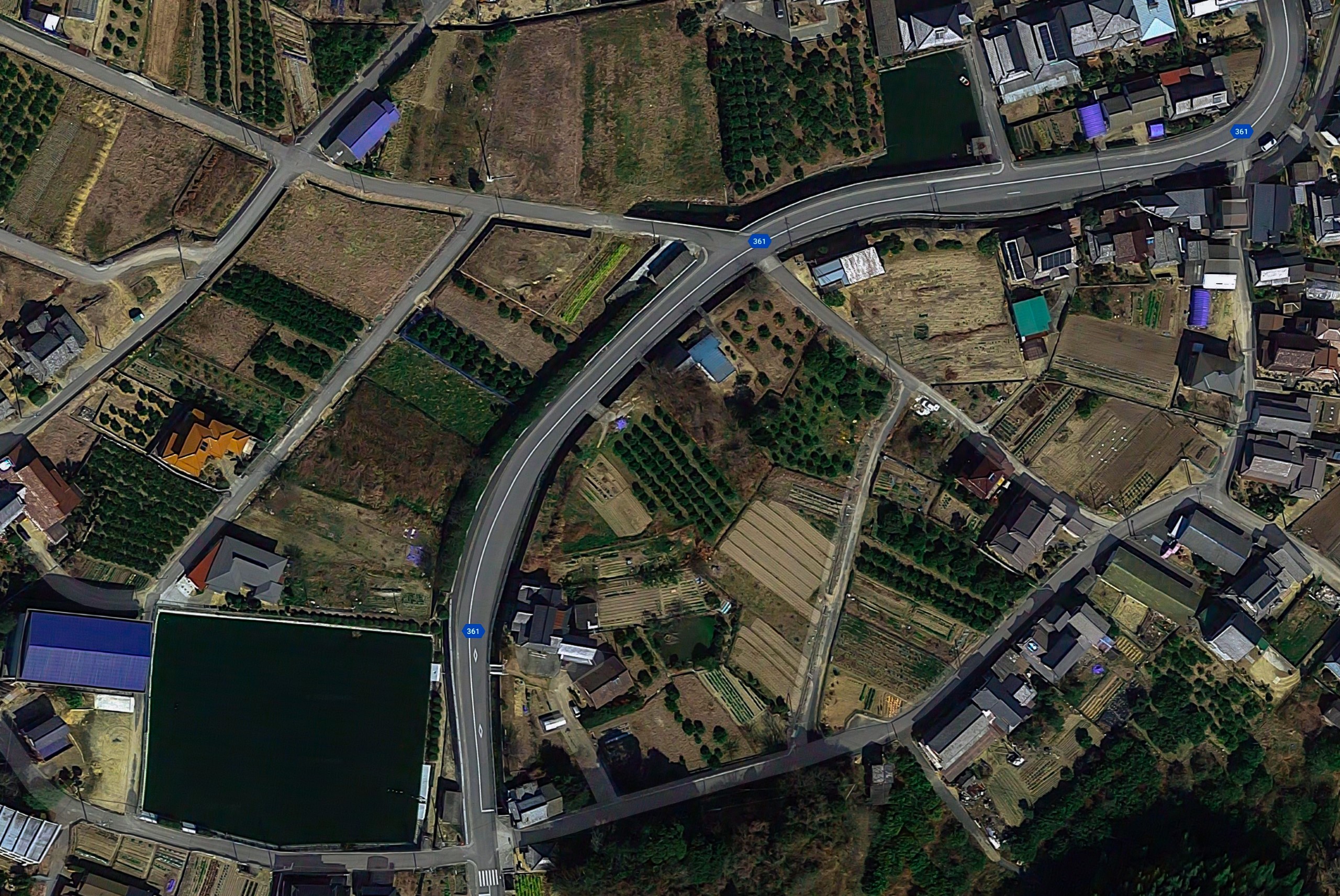
The Old Home page lists the current small-scale agriculture as: citrus varieties (柑橘), vegetables, flowers, salt, seaweed. The slope-grown citrus (mikan, lemons, varieties whose names you will learn from the farmers themselves) is the most visible. Salt and seaweed are the marine half: the Seto Naikai's tidal flats and quiet bays support both.
The historical agriculture was much larger. Kaneto Shindo's 1960 footage shows terraced fields across most of the visible slope. The current activity is a remnant.
The Foundation's artichoke project¶
The Foundation is actively working to introduce artichoke cultivation to Sagishima and, more broadly, to Japan. Artichokes are not currently grown on the island or commonly in Japan. The project is forward-looking, an institutional contribution that the Foundation is making to the island's agricultural future, rather than a tradition the Foundation is inheriting. This is why the gilded artichoke charm appears in the Ohenro rally and why a kitchen table is being made for Sumifuku House that reflects the artichoke project. Treat artichokes everywhere they appear as the Foundation's gift to Sagishima, not as Sagishima's gift to the Foundation.
The kitchen¶
Shared meals are taken outside, in the space between Tsumiki House and Itaru House. Breakfast, dinner, and the conversations that hold a cohort together happen here. Lunch is not always provided; the Welcome covers the practical arrangements.
12. The water question / 水の問い¶
The Thirsty Island sub-project of the Sagishima Data Project is the Foundation's standing investigation into the island's hydrology, agriculture, and slope vulnerability. The framing question: now that Sagishima's hydrology has shifted from self-sufficient to imported, and now that the population that the imported system was sized for has contracted by 84%, what is the right way to use the water that is available, and what are the consequences of letting formerly cultivated land lapse into shallow-rooted reforestation?
The work involves municipal water-system data, historical agricultural records, hydrodynamic modeling, and an attempt to integrate the local knowledge of the residents into the same model. Certain Measures (Bryan Ortega-Welch's design firm) contributes the visualization platform, adapted from work they previously did on the US Southwest. The project is collaborative; the modeling has begun; the conclusions are not yet drawn.
Knowing about Thirsty Island matters because it is the project that most directly says what kind of place Sagishima will be in fifty years, and what the Foundation's contribution to that future might be.
Source: Sagishima Data Project page; Foundation Welcome.
13. Friends of the Foundation, near and far / 私たちの近隣¶
The Foundation does not work alone. The institutions that share its concerns, materially or intellectually, form the Foundation's working geography. The list below is partial and is the kind of section future revisions of this document will expand.
On Sagishima itself¶
- Sagiura Elementary School (鷺浦小学校), with its principal, head teacher, and the roughly twenty-five children who attend. The school is the island's living link to the next generation, and the Foundation's most consequential community partnership.
- Tanimoto Construction Company (谷本建設), the island-based construction firm that supports the Workshop's deconstruction work.
- The Sunoue residents who gather for the 6:30am Radio Taiso. The list is not formal. The relationship is the gathering.
In the surrounding region¶
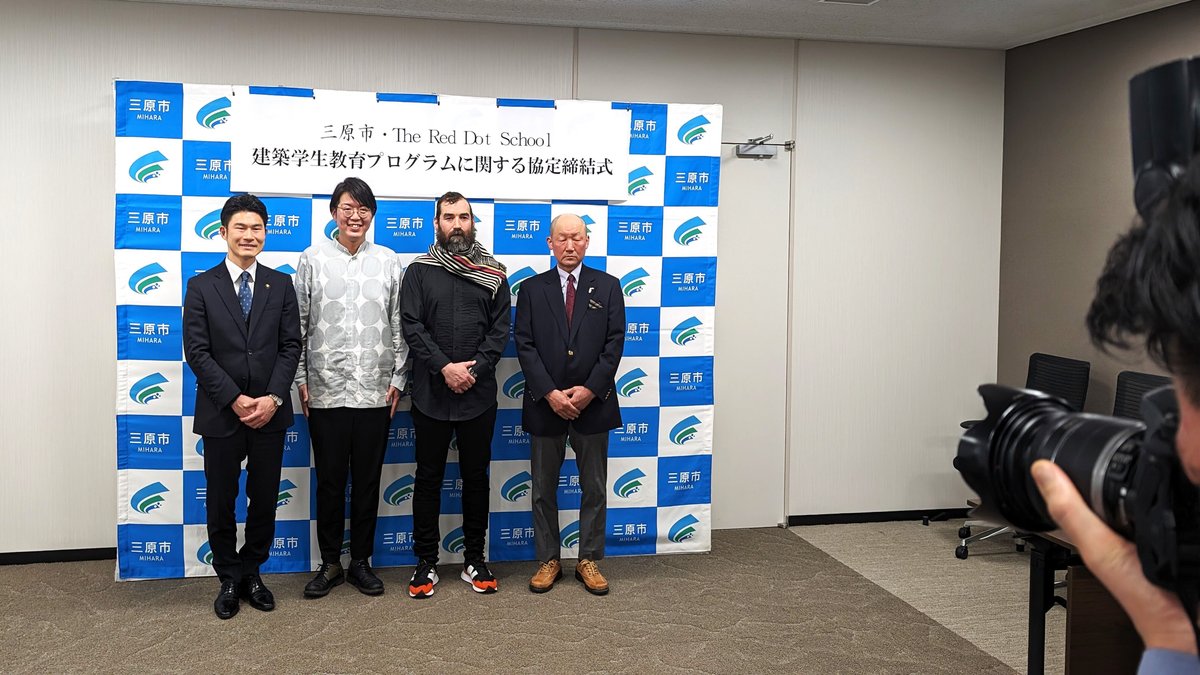
- The City of Mihara (三原市). The Foundation and the City signed a formal partnership on February 27, 2024, covering three areas: cooperation in architectural student education, research and education on construction-demolition-upcycling, and interaction with Sagiura Elementary School and the local community. The signing was attended by Mayor Yoshihiro Okada (岡田吉弘), Nao Kono and Bryan Ortega-Welch as representative directors, and Isso (Kawamoto Yoshishige) as director. The partnership is one of the formal anchors that keeps the Foundation rooted in municipal cooperation.
 - Hiroshima Prefecture (広島県). Less formally engaged so far, but the larger civic context.
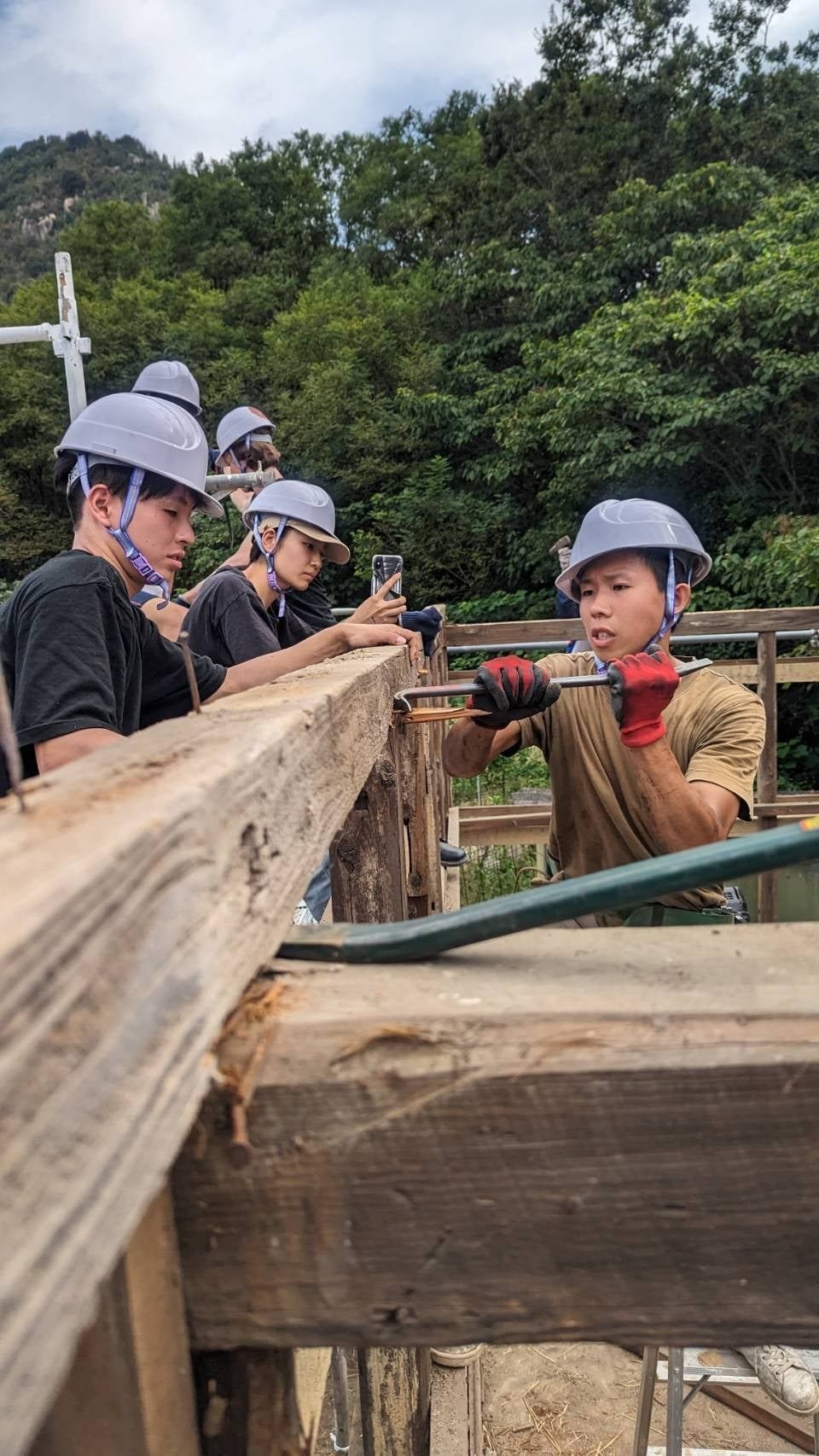
- Hiroshima University, Architecture Program, specifically the Sumikura+Ishigaki Laboratory. Associate Professor Hideaki Sumikura is on the Foundation's advisory board and the Hiroshima University collaboration was selected as part of Hiroshima University's 2023 Bridging Community Development Project. The collaboration addresses demolition and upcycling of vacant houses; it explores how to disassemble houses by hand and recover materials efficiently; and it builds workshop-based model projects from the recovered materials.
- Hiroshima Prefecture (広島県). Less formally engaged so far, but the larger civic context.
- Hiroshima University, Architecture Program, specifically the Sumikura+Ishigaki Laboratory. Associate Professor Hideaki Sumikura is on the Foundation's advisory board and the Hiroshima University collaboration was selected as part of Hiroshima University's 2023 Bridging Community Development Project. The collaboration addresses demolition and upcycling of vacant houses; it explores how to disassemble houses by hand and recover materials efficiently; and it builds workshop-based model projects from the recovered materials.
 - The Onomichi Akiya Saisei Project (尾道空き家再生プロジェクト). Onomichi-based; closely allied; the friend across the water.
Further out¶
- University of Tokyo, DECON/RECON Master's Architecture Studio. The principal pipeline of degree-seeking students into the Foundation's residencies, and a research partner via the Sagishima Data Project.
- University of Tokyo, Gondo Laboratory (権藤研究室). Listed as a collaborator on the May 2024 program. Specifics of the engagement to confirm.
- University of Melbourne, Master of Architecture. Joint sessions on Sagishima in January 2024 (Nancy, lecturer); collaboration ongoing.
- Certain Measures. Bryan's design firm; technical platform contributor to the Thirsty Island sub-project.
Sponsors, supporters, and craftspeople¶
The Foundation runs on a wide ecology of small contributions. Among the most visible:
- Hattendo (八天堂), the Mihara bakery whose Creamy Bread is a national-export symbol of the city. Program sponsor.
- MATCHA STAND MARUNI, matcha and nori retail (Tsukiji, Tokyo; Ichikawa, Chiba). Program sponsor.
- Omusubi Real Estate (おむすび不動産), DIY-property specialists from Matsudo and Shimokitazawa. Tono Donotsuka is their representative; the firm provided expertise on building acquisition for Sagishima work.
- Infinity Setouchi, Kotoya Co., Sagitei restaurant, Itō Nori Shop, and roughly fifteen other local businesses and organizations who provided facilities, food, and volunteer support during the May 2024 program.
- Moe Kanazawa (金澤萌), plasterer (shikkui craftsperson). Has led whitewashing workshops at multiple short programs (March 2025 SSS!, April 2025 short program). The recurring presence of a master craftsperson at the studios is one of the Foundation's quieter strengths.
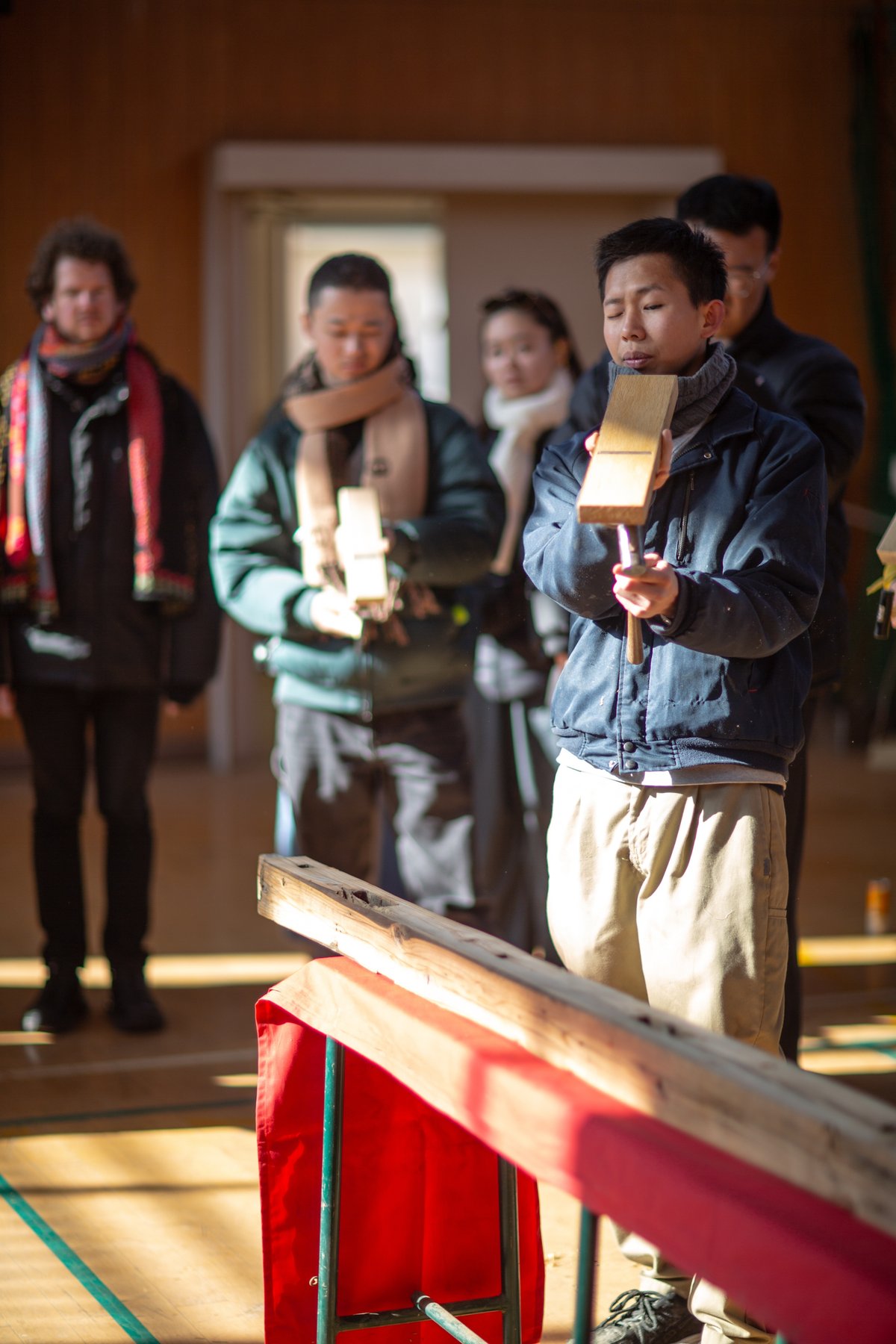
- Mr. Shikata (志方さん?), carpenter and community revitalization coordinator. Led the woodworking workshop during the January 2024 Melbourne visit, working with reclaimed timber from disassembled houses.
The Foundation's wider partner network is documented in Audit_RDS/01_People_and_Personnel/RDS_People_Research_Findings.md §8.
Sources: blog posts n399a9c4dfb36 and n2b3f78d79a71; partner chart 260514.4.A; thered.school/about.
14. The alumni voice / 卒業生の声¶
Four messages from the first GAFRAB May 2023 cohort (Seymour Tseng, Karly Tangonan, Tomona Hashida, Kentaro Tawara) are published on the Journal. They are worth reading in full; what follows is the register, briefly, of what former students take away.
- Seymour (UC Berkeley, landscape architecture): writes of the island as a place that becomes "home" by the act of being come back to. "Whenever you might be confused or want a break, you can always come back to where you started, you can always come back home."
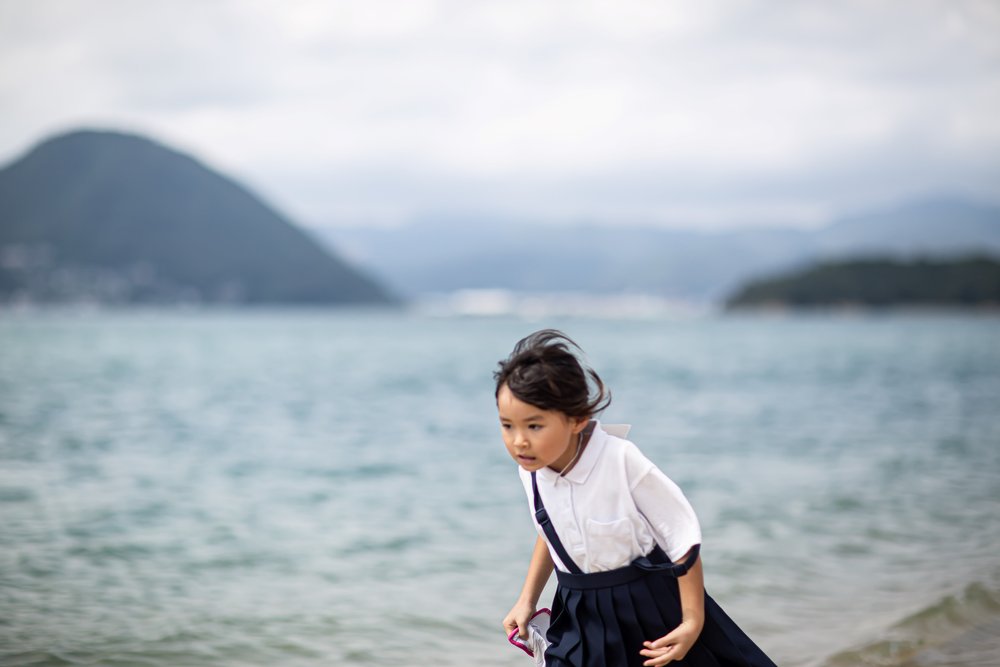
- Kentaro (University of Tokyo, architecture): writes about discovering that the studio was not only about deconstructing houses but about designing the system of education itself. He notes a moment with a child who preferred sharing a silent walk on the beach to conversation, and learns that "just walking on the beach together" is its own register of communication.
- Karly (University of Hawaii, architecture/landscape): writes about how the work made her conscious that "designs we create last for so many years before being forgotten"; reflects on the warmth across the language barrier with the Sagiura children.
- Tomona (Musashino Art University, interior design): writes that the studio gave her "the establishment of my own mind", and that her motivation to study language shifted from career preparation to wanting, simply, to understand her international peers better.
The four messages share a register. They are not about architecture; they are about what it felt like to be on the island. This is what alumni take with them and what they later carry forward as the Theory of Change describes (multimodal transporters).
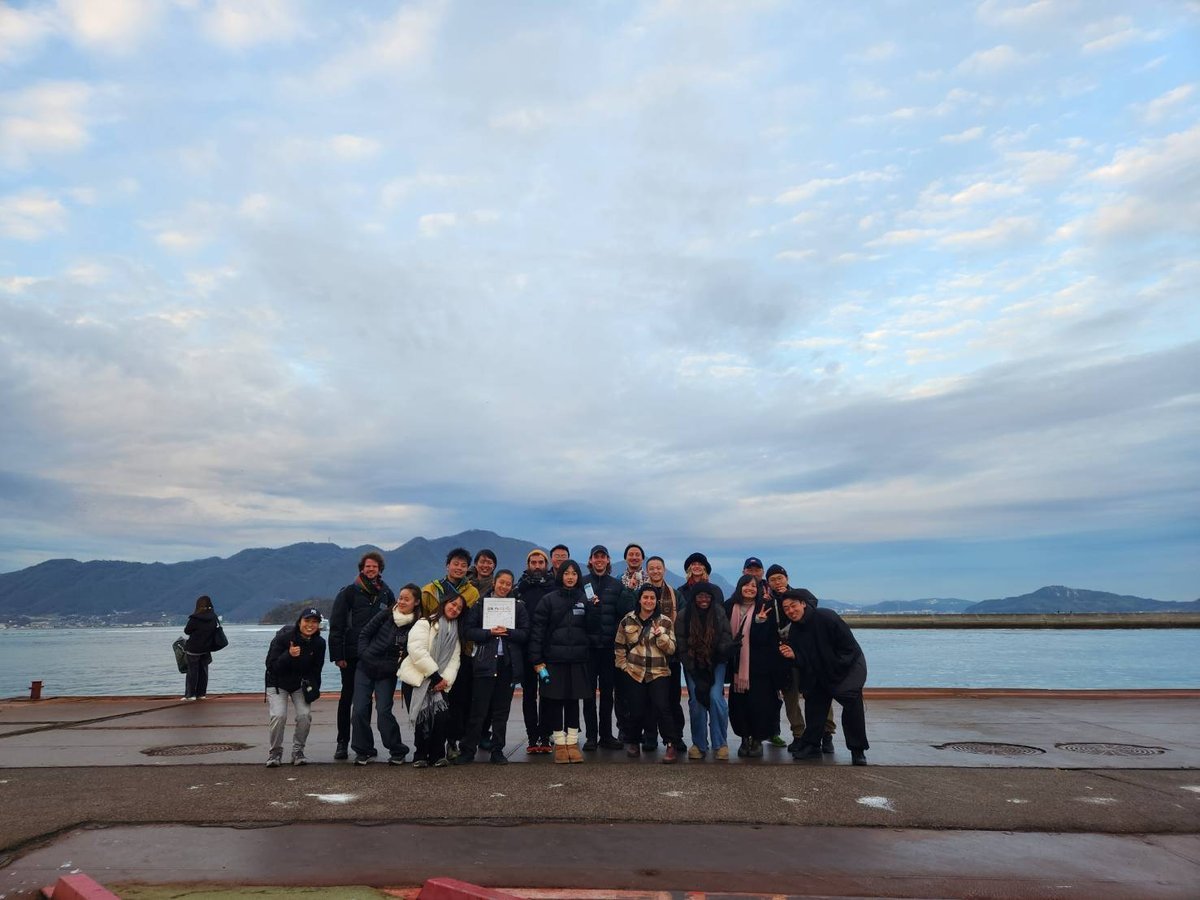
The April 2025 "distant place" post (Nao Kono) articulates the institutional theory behind what these alumni are describing: "Having a distant place is something like a technique for people learning something and living richly." The school's pedagogical bet is that some distance from one's daily life, in a serious place, in serious work, with serious people, is the form of education that endures. The alumni messages are the evidence that the bet is paying out.
Sources: blog posts n436ff6181376, n7c492da1bb8d, ne61719a7fda8, nf009f9abeda5, nfa5944d79f02.
15. The view from elsewhere / 外からの視線¶
A handful of texts and images sit outside the Foundation but are useful for thinking about Sagishima. They are listed here because, after some time on the island, you may want to triangulate what you are seeing against external accounts.
- Kaneto Shindo (新藤兼人), The Naked Island (裸の島, 1960). The director's masterwork, opening with aerial footage of Sagishima's then-intensive cultivation. The film is silent and contemplative, and it is closer to documentary than narrative. Watching it on Sagishima itself, after walking the actual hillsides, is one of the more direct ways to feel the contraction the island has gone through.
 - Hatsusaburo Yoshida (吉田初三郎), 1924 panoramic cartography. Yoshida was a master of pre-war Japanese bird's-eye-view maps. The Sagishima Data Project references his style as a representational anchor for the Foundation's digital twin work.
- Scaffold* Journal Vol. 2 No. 1 (2025), "I Want to Show you the Ocean: Akiya Deconstructed," by May Sato Bouziri. The most substantial external write-up of the Foundation's deconstruction work on Sagishima.
- Hatsusaburo Yoshida (吉田初三郎), 1924 panoramic cartography. Yoshida was a master of pre-war Japanese bird's-eye-view maps. The Sagishima Data Project references his style as a representational anchor for the Foundation's digital twin work.
- Scaffold* Journal Vol. 2 No. 1 (2025), "I Want to Show you the Ocean: Akiya Deconstructed," by May Sato Bouziri. The most substantial external write-up of the Foundation's deconstruction work on Sagishima.
16. What we still don't know / まだ知らないこと¶
Listed honestly, in the spirit of a working document:
- Isso's full inheritance. Isso is the institution's deepest living memory of Sagishima. The Foundation has barely begun to record it. The Isso-San Anthropology initiative (⚡️ Critical) is the structural response to this gap. Until that work is done, much of what is in this document is provisional and will be revised once a proper recording exists.
- Reconciling the island's geographic measurements. 8.72 km² or 16.3 km², depending on the source. Until the boundaries used in each are clarified, both are quoted here.
- A complete history of pre-modern Sagishima. Before the 1875 founding of the original Kakumeisha, we have no specific account in the Foundation's records. The municipal archives of Mihara, the records of the surrounding temple complexes, and Isso himself are the natural starting points.
- The full list and condition of the 88+α Ohenro alcoves. The Data Project's 88 Plus Alpha sub-project is the standing effort; the catalog is not yet complete.
- The status and the household stories of the akiya inventory. Each vacant house is a specific story; almost none of them are yet recorded.
- The hydrological model itself. Thirsty Island is in progress; the conclusions are not yet drawn.
- The other districts of the island beyond Sunoue and Sagiura. The Foundation's relationships with them are nascent. The Resident Community section of the Foundation's structure exists in part to deepen these.
- Many of the families currently here. The Foundation does not yet know most islanders by name, story, or kinship. This is the longest-horizon item on the list, and the one most worth being patient about.
17. A note on continuing to learn / 学び続けるための覚書¶
This document is a beginning, not a culmination. The Foundation's longer-term relationship with Sagishima will be expressed in many places: in the catalogue of recovered materials, in the deconstruction ceremonies, in the architectural plates the Studio produces, in the dancers who hold Sunoue's Obon choreography, in the Sagishima Data Project's growing digital twin, in the conversations at the morning Radio Taiso, in the long study Square does on the field of the Foundation. This document is one of those expressions, no more or less authoritative than the others.
If you find an error or an omission here, bring it to the Foundation. The compendium is a working document; corrections from those who have spent more time on the island than its current authors are precisely how it gets better.
The Welcome ended: Welcome to [X] Foundation. We are glad you are here.
This document ends: Stay long enough to begin to know the place. Then stay longer.
Sources cited in this document¶
The Red Dot School Journal on note.com (all 23 posts)¶
The Journal is the institution's primary publishing record and the spine of this compendium. The full magazine inventory:
About (m52adac93b343):
- 私たちの校舎「格明舎」/ Our school building Kaku-Mei-Sha (Nao Kono, 2024-01-21)
- 学生宿舎「住福の家」/ Students Dormitory of SUMIFUKU NO IE (Nao Kono, 2024-01-21)
Research (mf3af1828d03d):
- 佐木島の人口ピラミッド / The demographic pyramid of Sagishima (Nao Kono, 2024-01-21)
Collaboration (mb5825c08a174):
- 一般社団法人The Red Dot Schoolと三原市が連携協定を結びました / Partnership with Mihara City (Nao Kono, 2024)
- 広島大学との連携プロジェクト / Collaboration with Hiroshima University (Nao Kono, 2024-01-21)
- 鷺浦小学校との連携 / Collaboration with Local elementary school kids (Nao Kono, 2024-01-22)
- メルボルン大学修士設計スタジオとの連携 / Collaboration with Melbourne University (Nao Kono, 2024-01-21)
- 2023年プログラムのスポンサーシップ / Sponsorship in 2023 (Nao Kono, 2024-01-22)
- 2024年5月プログラムへのご支援・ご協力について / Support and cooperation for the May 2024 program (Nao Kono, 2024-07-25)
Journal (mfaebb7e95e53):
- SAGISHIMA乾杯!ドネーション(寄付)のお願い / Donation request (Nao Kono, 2025-04-15)
- 佐木島という「遠い場所」で建築を学ぶ / Learning architecture in a "distant place" (Nao Kono, 2025-04-02)
- 【締め切りました】佐木島ショートステイ(SSS!) by RDS (2025-01-28)
- 【日記】2023年5月プログラム最終日 / Diary: final day of May 2023 program (Nao Kono, 2024-06-04)
- 2024年5月プログラム発表会&パーティへのお誘い / May 2024 presentation invitation (Nao Kono, 2024-05-19)
- 【場所変更のお知らせ】3/25花見パーティ / Hanami party on the 25th of March (Nao Kono, 2024-03-02)
- 2024年3月ワークパーティへの参加者募集 / Call for participants for March 2024 work party (Nao Kono, 2024-02-24)
- スタジオ参加を検討中の方へ / For Japanese candidates (Nao Kono, 2024-02-20)
- 2025.5月プログラム募集開始 / May 2025 program applications begin (Nao Kono, 2024-02-20)
Messages from Alumni (m17ea1807f1da):
- 卒業生の言葉 ① / Message from Alumni ① (Seymour) (2024-01-21)
- 卒業生の言葉 ② / Message from Alumni ② (Karly) (2024-01-21)
- 卒業生の言葉 ③ / Message from Alumni ③ (Tomona) (2024-01-21)
- 卒業生の言葉 ④ / Message from Alumni ④ (Kentaro) (2024-01-21)
Other sources¶
- thered.school site pages: About, Old Home (works-in-progress), Members/Sagishima Data Project
Audit_RDS/02_Mission_Values_and_Compass/TOC_DRAFT_2025_12_27A_Theory_of_Change.pdfAudit_RDS/01_People_and_Personnel/RDS_People_Research_Findings.mdAudit_RDS/05_Output_and_Impact/Sagishima_Data_Project.mdStudio_X_Proposal/Foundation_Welcome_Document.docx(2026)Studio_X_Proposal/Studio_X_Other_Thoughts_and_Forward_Vision.docx(2026)88 Plus Alpha_Rally.docx(this folder)- Kaneto Shindo, The Naked Island (1960)
- Scaffold* Journal Vol. 2 No. 1 (2025), May Sato Bouziri