draft
The 88+α Ohenro / 88+α 御遍路
Overview / 概要
Sagishima holds its own miniature version of the Shikoku Ohenro (四国遍路), the Buddhist pilgrimage of 88 sacred sites. The Sagishima version is 88 small stone alcoves (hokora, 祠) scattered across the island, each housing a small object of devotion, plus some extras beyond the 88 (the "+α") that the Foundation has begun to catalogue. Walking the full route is the way to encounter them; the route itself is the heart of the practice, and the slowest available reading of the island.
佐木島には、88か所の霊場を巡る仏教の巡礼である四国遍路の、独自のミニチュア版がある。佐木島版は、島中に点在する88の小さな石の祠で、それぞれに小さな信仰の対象が納められている。さらに、88を超えるいくつかの追加分(「+α」)があり、財団はその目録づくりを始めている。すべてを巡り歩くことが、それらと出会う方法である。道のりそのものがこの実践の核であり、島を読み解くもっとも遅い手立てでもある。
What we know / わかっていること
Two facts from Bryan Ortega-Welch's tour notes (2026-05-29):
Bryan Ortega-Welch のツアーメモ(2026年5月29日)からの二つの事実:
- It is a founded artifact, not folk accretion. The mini Ohenro was the work of a single wealthy patron in the past, who decided to create the route and place the hokora across the island. One person willed it into being. これは民間の自然な積み重ねではなく、創設された人工物である。 このミニ遍路は、かつて一人の裕福な後援者の手によるもので、その人物が道のりを作り、島中に祠を据えることを決めた。一人の人間がこれを意志の力で生み出したのである。
- The order on the ground is no longer legible. Each hokora carries a number and a name, but the alcoves were moved repeatedly over the years, often as a joke (when someone married, neighbors thought it funny to relocate a hokora in front of the newlyweds' house). The sequence has drifted from the geography, so walking in number order is no longer the same as walking in space. 現地での順序はもはや読み取れない。 各祠には番号と名前が付いているが、祠は長年にわたって何度も動かされてきた。多くは冗談半分で動かされた(誰かが結婚すると、近所の人々は新婚夫婦の家の前に祠を移すのが面白いと考えた)。順序は地理から離れてしまい、番号順に歩くことは、もはや空間を順に歩くことと同じではない。
The imagined experiential layer / 構想されている体験の層
The Foundation has imagined a stamp-rally rubbing book: the visitor takes a paper rubbing of each alcove sign across the island, and the completed book is brought to a shrine where a camera-and-light system acknowledges each rubbing as it is placed at the altar, building toward a quiet ceremony of completion. The reward for completing all 88+α: a small gilded artichoke charm, whose motif draws from the Foundation's artichoke project, an active RDS introduction, not existing island tradition.
財団はスタンプラリー式の拓本帳を構想している。来訪者は島中の各祠の銘板の拓本を紙に取り、完成した帳面を社へ持ち寄る。そこではカメラと光の仕掛けが、祭壇に拓本が置かれるたびにそれを認め、静かな満願の儀式へと積み上がっていく。88+αすべてを巡り終えた者への褒美は、小さな金箔のアーティチョークのお守りである。その意匠は財団のアーティチョーク・プロジェクトに由来する。これはレッドドットスクールが現に持ち込んでいるものであり、島の既存の伝統ではない。
The 88+α as structural metaphor / 構造の比喩として
The number 88 is bounded but indefinite: fixed in the religious tradition, yet the +α admits new locations as needed. The Foundation operates similarly: five organs and four shapes (bounded), plus new initiatives, fellows, and ideas (the +α). See Research / 88 Plus Alpha for the documentation effort.
88という数は、区切られているが定まりきってはいない。宗教の伝統のなかでは固定されているが、+αは必要に応じて新たな場所を受け入れる。財団も同じように動いている。五つの組織と四つの形(区切られたもの)に加えて、新たな取り組み、フェロー、アイデア(+α)がある。記録の取り組みについてはリサーチ / 88 Plus Alphaを参照のこと。
Related / 関連
- Research / 88 Plus Alpha (the cataloguing sub-project) · Artichoke Project / アーティチョーク・プロジェクト · the file
88 Plus Alpha_Rally.docxリサーチ / 88 Plus Alpha(目録づくりのサブプロジェクト) · アーティチョーク・プロジェクト · ファイル88 Plus Alpha_Rally.docx
Open questions / 未解決の問い
- The full list and condition of the alcoves, and where each has moved from and to, is not yet complete. See open questions (item 4). 祠の完全な一覧と状態、そして各祠がどこからどこへ動かされたかは、まだ完成していない。未解決の問い(項目4)を参照のこと。
Historical substrate: real pilgrimage culture on Sagi / 歴史的下地 ― 佐木の本物の巡礼文化
The Foundation's mini Ohenro sits atop a documented, centuries-deep pilgrimage culture on the island. Primary records preserved in 双鷺洲 (Sōroshū) show that islanders were active in two of Japan's great pilgrimage traditions: the Shikoku circuit (四国遍路) and the Saigoku Thirty-Three Kannon circuit (西国三十三観音霊場), and that the island carries its own Kannon images, yamabushi training ground, and a local "33 Kannon" set. The material below is drawn from classical-Japanese documents and historian commentary quoted in 双鷺洲; readings of personal and temple names are best-effort and should be checked by a native historian before any formal use.
財団のミニ遍路は、島に何世紀にもわたって根づいた、記録の残る巡礼文化の上に成り立っている。双鷺洲(そうろしゅう)に収められた一次史料は、島民が日本の二大巡礼の伝統 ― 四国遍路と西国三十三観音霊場 ― に深く関わっていたこと、そして島が独自の観音像・山伏の行場・地元の「三十三観音」を有していたことを示している。以下の内容は双鷺洲が引用する古文書と歴史家の解説に基づく。人名・寺院名の読みは最善の推定であり、正式な使用の前に日本人の歴史家による確認を要する。
Shikoku pilgrimage permits from Anrakuji parishioners (1840) / 安楽寺檀家の四国巡礼手形(1840年)
Two travel permits dated Tenpō 11 (1840), 2nd month document islanders setting out on the Shikoku pilgrimage (四国拝礼 / 順礼). The first certifies that a party of villagers, named as Bunzō (文蔵), Wasaburō (和三郎), Aizō (愛蔵), Kyūzō (久蔵) and others (a count noted as five persons), were hereditary Shingon-sect parishioners (代々真言宗当寺旦那) of Anrakuji (安楽寺). It requests safe passage through barriers and, if needed, lodging or burial arrangements along the way (双鷺洲 p.85, quoting the 安楽寺 travel permit of 天保十一年).
天保十一年(1840年)二月付の二通の通行手形が、四国巡礼(四国拝礼/順礼)へ旅立つ島民を記録している。一通目は、文蔵・和三郎・愛蔵・久蔵ら(人数は五人と注記)の村人が安楽寺の「代々真言宗当寺旦那」(代々の真言宗檀家)であることを証し、関所の安全な通過と、必要があれば道中の宿や埋葬の手配を求めている(双鷺洲 p.85、天保十一年「安楽寺」通行手形より)。
The permit names the issuing parties as Anrakuji (安楽寺, sealed) of the same province and district at Suha / Sunami village (同国同郡須浪村; village name TENTATIVE), together with the headman (庄屋) of Mukōda-no-ura village (向田野浦村, sealed "庄威"), and was addressed to the barrier officials (御関所) and town officials along the route (双鷺洲 p.85).
この手形は、発行者を「同国同郡須浪村」(須浪村/須波村、村名はTENTATIVE)の安楽寺(押印)と、向田野浦村庄屋(押印「庄威」)とし、宛先を道中の御関所および町役人としている(双鷺洲 p.85)。
A second, complementary form, a receipt-of-pilgrim travel form (揚り手形之事) of the same date, covers Wasaburō (和三郎), Eikyū (栄久), Aizō (愛蔵) and others of Mukōda-no-ura village in Geishū / Aki province (芸州豊田郡向田野浦村) on their Shikoku circuit. It was issued and sealed by Kōshūin (光習院; reading TENTATIVE) of Imabari in Iyo province (与州今治), again requesting unobstructed passage through the barrier (双鷺洲 pp.85-86).
同じ日付の二通目、補完的な「揚り手形之事」(受入の手形)は、芸州豊田郡向田野浦村の和三郎・栄久・愛蔵らの四国順礼を対象とする。与州今治(伊予国今治)の光習院(読みTENTATIVE)が発行・押印し、やはり関所の支障なき通過を求めている(双鷺洲 pp.85-86)。
Yamabushi practice: Gyōja-yama and the Ishizuchi Shrine / 修験の行 ― 行者山と石鎚神社
Sagi has a Gyōja-yama (行者山, "ascetic's mountain") and, built on it, a Gyōja-dō (行者堂) enshrining Fudō (不動). Both bear the name gyōja (ascetic / practitioner), and the mountain is interpreted as a yamabushi (mountain-ascetic) training ground serving Sagi and neighboring villages (双鷺洲 p.94).
佐木には行者山があり、その上に不動を祀る行者堂が建てられている。いずれも「行者」の名を負い、行者山は佐木および近隣の村に供する山伏の行場であったと解されている(双鷺洲 p.94)。
A ridge-tablet (棟札) records that the Gyōja-dō was rebuilt in Bunka 9 (1812), which shows it already existed before that year. The tablet reads "再建立役行者堂村内安人法繁栄祈處" (a prayer for the village's peace and prosperity) and names Anrakuji's then-resident priest Chōhō Hōin (智法法印; reading TENTATIVE), the leader Inoue Kihei (井機兵衛 / 井上機兵衛; reading TENTATIVE), and a naka-nichijin (双鷺洲 p.94, quoting the 棟札).
棟札は、行者堂が文化九年(1812年)に再建されたことを記し、それ以前から建っていたことを示す。棟札には「再建立役行者堂村内安人法繁栄祈處」(村内の安寧と繁栄を祈る)とあり、当時の安楽寺住職・智法法印(読みTENTATIVE)、施主の井機兵衛(井上機兵衛、読みTENTATIVE)、および「中日人(なかにちじん)」の名が記されている(双鷺洲 p.94、棟札より)。
Above the Gyōja-dō, climbing higher up Gyōja-yama, an Ishizuchi Shrine (石鎚神社) is enshrined surrounded by large rocks; a large flat rock before the shrine evokes an ascetic training site. A torii was donated in Shōwa 54 (1979) by Okamoto Rikizō (岡本力三; reading TENTATIVE) (双鷺洲 p.94).
行者堂の上手、行者山をさらに登った先には、大岩に囲まれて石鎚神社が祀られ、社前の大きな平岩は行場をしのばせる。昭和五十四年(1979年)に岡本力三(読みTENTATIVE)が鳥居を奉納した(双鷺洲 p.94)。
When making pilgrimage to the Ishizuchi Shrine in Shikoku, devotees first secluded themselves in the Gyōja-dō and then visited the Ishizuchi Shrine near the summit, an enactment that evokes the figure of the yamabushi (双鷺洲 p.94).
四国の石鎚神社へ参詣する際、信者はまず行者堂に籠り、ついで山頂近くの石鎚神社に参った。この所作は山伏の姿をしのばせる(双鷺洲 p.94)。
A further record from the Ii family documents (井家文書; reading TENTATIVE) shows that this mountain-ascetic faith reached the island from outside. In Bunsei 5 (1822), when the deputy of "Komeyama yamabushi Daijō-in" (米山寺の山伏・大乗院; all readings TENTATIVE) traveled to the capital, the village conferred and granted 25 monme of official silver (官銀二五匁), evidence that Komeyama-ji yamabushi (a nassho / propagating order) came to Sagi to perform prayer-rites (祈祷) (双鷺洲 pp.94-95, quoting "米山大乗院次官上京…官銀弐拾五匁…文政五年九月廿五日").
井家文書(読みTENTATIVE)のさらなる記録は、この修験信仰が島外から伝わったことを示す。文政五年(1822年)、「米山寺の山伏・大乗院」(読みすべてTENTATIVE)の次官が上京した折、村は協議して官銀二十五匁を給した。これは米山寺の山伏(納所山伏)が祈祷のため佐木に来ていた証である(双鷺洲 pp.94-95、「米山大乗院次官上京…官銀弐拾五匁…文政五年九月廿五日」より)。
The Imo Kannon cliff-carving at Sagi-dera-yama / 佐木寺山の芋観音磨崖仏
At Sagi-dera-yama (佐木寺山), the Imo Kannon (芋観音, "sweet-potato Kannon," a form of Kanzeon Bosatsu / Avalokiteshvara) is a cliff-carved Buddha (磨崖仏): a Kannon image carved into a large natural rock and enshrined in a hall partway up the mountain (双鷺洲 p.110). The image is life-sized, carved with a vermilion (朱色) robe, a flower-like crown on the head, a lotus bud in the hand, and a skirt-hem shown blowing in the wind; it is worshipped as the Imo Kannon (双鷺洲 p.110).
佐木寺山には、芋観音(観世音菩薩の一形)が磨崖仏として刻まれている。大きな自然石に観音像を彫り、山の中腹の堂に祀ったものである(双鷺洲 p.110)。像は等身大で、朱色の衣をまとい、頭に花のような宝冠、手に蓮の蕾を持ち、裳の裾は風になびく姿に彫られ、芋観音として信仰されている(双鷺洲 p.110)。
On the rock to the right of the image are inscribed the date "Meiji 3 (1870), kanoe-uma year, 3rd month," the phrases "safety for the whole village, abundant harvest of all crops" (村中安全諸作豊登) and "Saikoku Sanjūsan-ban" (西国三十三番, 33rd of the Saikoku pilgrimage), headed by the originator (発起人) Kamedaya Chōshichi (亀田屋長七) and steward (世話人) Yasaburō (弥三郎), followed by many names (双鷺洲 p.110).
像の右側の岩には「明治三年庚午三月」の年紀と、「村中安全諸作豊登」「西国三十三番」の文言が刻まれ、発起人・亀田屋長七、世話人・弥三郎を筆頭に多くの人名が続く(双鷺洲 p.110)。
A scholarly puzzle attaches to this image. The inscription reads "Saikoku Sanjūsan-ban," and the Kannon of that pilgrimage number is normally the Eleven-Headed Kannon (十一面観音); but the carved figure, with a flower-like ornament on the head, differs from a standard Eleven-Headed Kannon. This has led to the reading that the figure instead commemorates the bride who is said to have introduced rot-resistant sweet potatoes to the island in Bunka 2 (1805), hence "Imo (sweet potato) Kannon" (双鷺洲 p.110). This interpretation is from historian commentary in 双鷺洲 and should be flagged for native/historian review.
この像には学術的な謎がある。銘は「西国三十三番」と読め、その札所番号の本尊は通常は十一面観音であるが、頭に花状の飾りを持つ彫像は標準的な十一面観音とは異なる。このことから、像はむしろ文化二年(1805年)に腐りにくい甘藷(さつまいも)を島に伝えたとされる嫁を記念したもので、ゆえに「芋(いも)観音」と呼ばれるという解釈が生まれている(双鷺洲 p.110)。この解釈は双鷺洲の歴史家の解説によるもので、日本人・歴史家による確認を要する。
The chronology of the Sagi-dera-yama Imo Kannon, as reconstructed in 双鷺洲, runs: Bunka 2 (1805), rot-resistant sweet potato introduced from Shigei (繁永); Bunka 11 (1814), the Imo Kannon built on Hōkyō-zan (宝篋山, also written 宝筺山); Meiji 3 (1870), the Hōkyō-zan Imo Kannon repaired (the inscribed "Meiji 3" date is thought to mark this repair, not the original carving) (双鷺洲 pp.110-111).
双鷺洲が再構成する佐木寺山の芋観音の年表は次のとおり ― 文化二年(1805年)、繁永より腐りにくい甘藷を導入;文化十一年(1814年)、宝篋山(宝筺山とも)に芋観音を建立;明治三年(1870年)、宝篋山の芋観音を修復(刻まれた「明治三年」の年紀は当初の彫像ではなくこの修復を示すと考えられる)(双鷺洲 pp.110-111)。
Later repairs and rebuildings continued into the modern era:
近代に入っても修復・再建が続いた:
- Meiji 15 (1882) / 明治十五年: the Kannon at Tera-yama (寺山) was rebuilt at the instigation (発願) of Shirasu Kamesaburō (白須亀三郎); the honzon (main image) is noted as having existed since antiquity (双鷺洲 p.111). 寺山の観音が白須亀三郎の発願により再建された。本尊は古来より存していたと記される(双鷺洲 p.111)。
- Shōwa 11 (1936) / 昭和十一年: the Imo Kannon hall (芋観音堂) on Hōkyō-zan was rebuilt; steward-representatives (世話人総代) were Hikiji Shigematsu (引地重松), Hikiji Miyajirō (引地宮次郎), Shirasu Matasuke (白須又助), and Hikiji Dengorō (引地傳五郎) (双鷺洲 p.111). 宝篋山の芋観音堂が再建された。世話人総代は引地重松・引地宮次郎・白須又助・引地傳五郎(双鷺洲 p.111)。
- Shōwa 49 (1974) / 昭和四十九年: the Imo Kannon hall, damaged by a typhoon the previous year (1973), was repaired (双鷺洲 p.111). 前年(1973年)の台風で損傷した芋観音堂が修復された(双鷺洲 p.111)。
A local "33 Kannon" on Koyufune-yama / 小湯舟山の地元「三十三観音」
On Koyufune-yama (小湯舟山, also written 小湯船山) a group of stone Buddhas called "Kannon-san" and "Imo Kannon" includes the Saikoku 33 Kannon, Fudō Myōō (不動明王), Yakushi Nyorai (薬師如来), and Kōbō Daishi (弘法大師) (双鷺洲 p.113). In Shōwa 3 (1928), at the summit, this stone-Buddha group was enshrined, led by Yuasa Masamori (湯浅正盛) and his father Kamematsu (亀松) together with 46 contributors (双鷺洲 p.113).
小湯舟山(小湯船山とも)には、「観音さん」「芋観音」と呼ばれる石仏群があり、西国三十三観音、不動明王、薬師如来、弘法大師を含む(双鷺洲 p.113)。昭和三年(1928年)、山頂にこの石仏群が、湯浅正盛とその父・亀松を中心に四十六名の寄進者によって祀られた(双鷺洲 p.113)。
Among this group, the No. 33 Kannon is enshrined separately beside Fudō Myōō and is also called Imo Kannon, modeled on the fact that Anrakuji's (安楽寺) own Imo Kannon is No. 33 (双鷺洲 pp.113-114). The island's local devotion thus repeatedly keys itself to the No. 33 slot of the Saikoku circuit.
この石仏群のうち、第三十三番観音は不動明王の傍らに別に祀られ、こちらも芋観音と呼ばれる。これは安楽寺の芋観音が第三十三番であることにならったものである(双鷺洲 pp.113-114)。島の地元信仰は、こうして繰り返し西国巡礼の第三十三番に結びつけられている。
The Anrakuji 33-Kannon set (1786) / 安楽寺三十三所観音(1786年)
A set of 33 Kannon images of the Saigoku-33-temple type was established at Anrakuji (安楽寺) in Tenmei 6 (1786). 双鷺洲 gives a roster of image names, donors (寄進者), and current holders / recipients (所持者・拝受者) keyed to the Mukōda (向田), Sunoue (須ノ上), and Sagi (佐木) districts (双鷺洲 p.137, item (5) "安楽寺三十三所觀音、寄進者・拝受者," 建立 天明六年 (1786)).
天明六年(1786年)、西国三十三所写しの三十三観音が安楽寺に建立された。双鷺洲は、向田・須ノ上・佐木の各地区に対応した像名・寄進者・所持者(拝受者)の名簿を載せている(双鷺洲 p.137、項目(5)「安楽寺三十三所觀音、寄進者・拝受者」、建立 天明六年〈1786年〉)。
Background: the Saigoku Thirty-Three Kannon circuit / 背景 ― 西国三十三観音霊場
The Saigoku Thirty-Three Kannon pilgrimage circuit (西国三十三観音霊場) is the oldest such circuit in Japan, said to have been established in the early Nara period, Yōrō 2 (718) (双鷺洲 p.135). The holy sites (霊場) span 2 fu (urban prefectures) and 5 ken, covering a distance of about 1000 km, with Seigantoji (青岸渡寺) at Nanki Nachisan (那智山) as No. 1 and Kegonji (華厳寺) at Mino Tanigumi-san (谷汲山; reading TENTATIVE) as No. 33 (双鷺洲 p.136).
西国三十三観音霊場は日本最古の観音巡礼で、奈良時代初期の養老二年(718年)に開創されたと伝えられる(双鷺洲 p.135)。霊場は二府五県にまたがり、距離はおよそ1000kmに及び、第一番は南紀那智山の青岸渡寺、第三十三番は美濃谷汲山(読みTENTATIVE)の華厳寺である(双鷺洲 p.136)。
In the mid-Heian period (968-1008), Retired Emperor Kazan (花山法皇, Kazan Hōō) personally made the pilgrimage of the Kannon holy sites, promoting the faith and rooting it among the common people, for which he came to be revered as the "restorer" (中興の祖) of the pilgrimage (双鷺洲 p.136). The holy sites enshrine seven forms of Kannon: Senju Kannon (千手観音), Batō Kannon (馬頭観音), Jūichimen Kannon (十一面観音), Nyoirin Kannon (如意輪観音), Juntei Kannon (准胝観音), Shō Kannon (聖観音), and Fukūkenjaku Kannon (不空羂索観音) (双鷺洲 p.136; the source's OCR "不空腐索" is read as 不空羂索).
平安中期(968〜1008年)、花山法皇(かざんほうおう)はみずから観音霊場を巡礼し、信仰を広めて庶民に根づかせたことから、巡礼の「中興の祖」とあがめられるようになった(双鷺洲 p.136)。霊場は七種の観音 ― 千手観音・馬頭観音・十一面観音・如意輪観音・准胝観音・聖観音・不空羂索観音 ― を祀る(双鷺洲 p.136。底本のOCR「不空腐索」は「不空羂索」と読む)。
Note on this layer / この層についての注記
This historical material describes the island's inherited pilgrimage culture, drawn from primary documents and historian commentary quoted in 双鷺洲. It is distinct from the founded mini Ohenro described above, which a single patron created by placing 88 hokora across the island. The two are presented side by side, not conflated: the inherited Saikoku / Shikoku devotion and the local Imo Kannon and 33-Kannon sets are the cultural ground the founded route plays upon. All classical-Japanese transcriptions, the sweet-potato-bride reading of the Imo Kannon, and the tentative personal- and place-name readings flagged above should be verified by a native reader and a local historian before any outward-facing use.
この歴史資料は、双鷺洲が引用する一次史料と歴史家の解説に基づき、島が受け継いできた巡礼文化を述べるものである。これは、上記の、一人の後援者が島中に88の祠を据えて創設したミニ遍路とは別個のものである。両者は同一視せず並置する。受け継がれてきた西国・四国の信仰と、地元の芋観音および三十三観音の石仏群は、創設された道のりが奏でられる文化的土壌である。上記でTENTATIVEとした古文書の翻刻・芋観音の「甘藷を伝えた嫁」説・人名地名の読みは、対外的に用いる前に日本語母語話者および地元の歴史家による確認を要する。
Sources / 出典
-
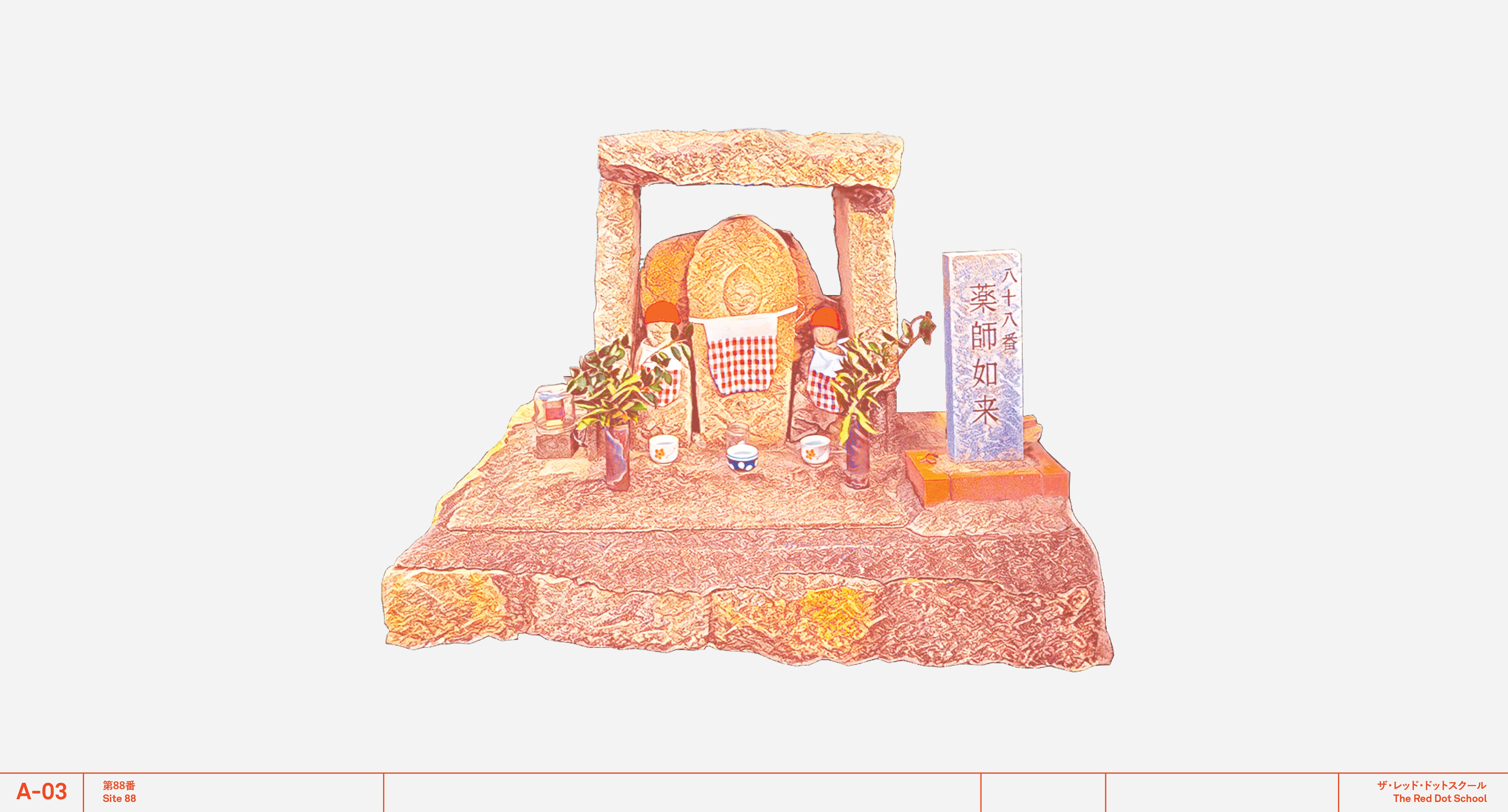
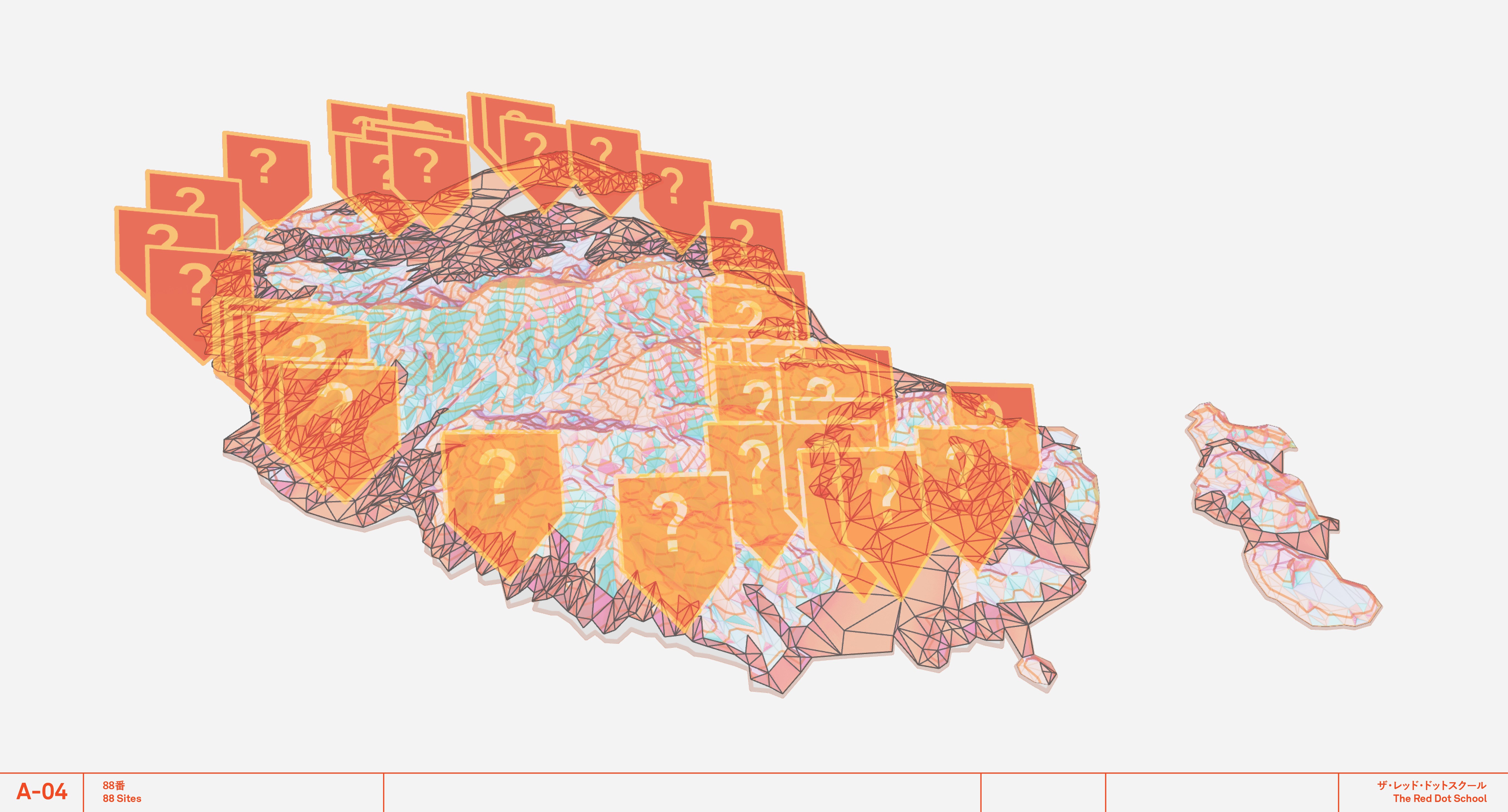
88 Plus Alpha rally doc; Sagishima Data Project page; Bryan Ortega-Welch tour notes (2026-05-29, communicated 2026-05-30). Foundation drawing plates A-03 (Site 88, Yakushi Nyorai) and A-04 (the island alcove map), in the vermillion-on-cream drawing language. See bibliography. 88 Plus Alpha rally doc;佐木島データ・プロジェクトのページ;Bryan Ortega-Welch のツアーメモ(2026年5月29日、2026年5月30日伝達)。財団の製図プレートA-03(第88番、薬師如来)およびA-04(島の祠の地図)。いずれもクリーム地に朱の製図言語による。文献目録を参照のこと。
-
双鷺洲 (Sōroshū): pp.85-86 (Anrakuji and Kōshūin Shikoku pilgrimage permits, 天保十一年 / 1840); pp.94-95 (Gyōja-yama, Gyōja-dō, Ishizuchi Shrine, Komeyama / Daijō-in yamabushi, Ii-ke monjo / 井家文書); pp.110-111 (Sagi-dera-yama Imo Kannon and its chronology / repairs); pp.113-114 (Koyufune-yama 33-Kannon stone-Buddha group); pp.135-137 (Saigoku 33-Kannon circuit; Anrakuji 33-Kannon set, 天明六年 / 1786). 双鷺洲 quotes the deeper primaries (travel permits, the Gyōja-dō 棟札, the Ii family documents, and the Anrakuji roster); cite those originals where this material is used downstream. 双鷺洲:pp.85-86(安楽寺・光習院の四国巡礼手形、天保十一年/1840年);pp.94-95(行者山・行者堂・石鎚神社・米山/大乗院の山伏・井家文書);pp.110-111(佐木寺山の芋観音とその年表・修復);pp.113-114(小湯舟山の三十三観音石仏群);pp.135-137(西国三十三観音霊場;安楽寺三十三所観音、天明六年/1786年)。双鷺洲はより深い一次史料(通行手形・行者堂棟札・井家文書・安楽寺名簿)を引用しており、本資料を下流で用いる際はそれらの原典を引くこと。